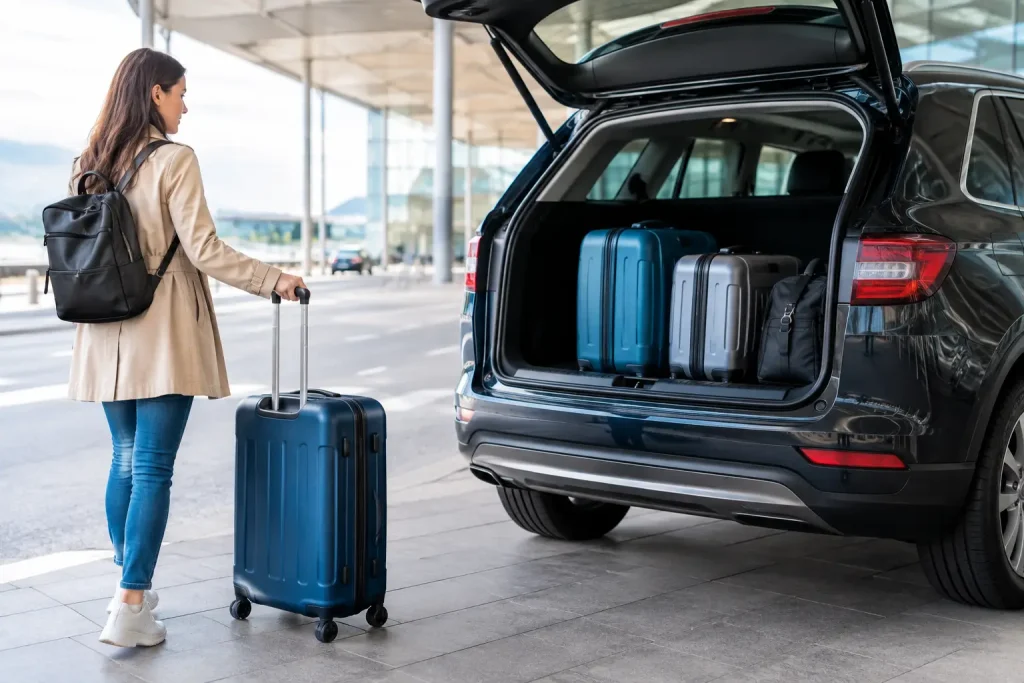
A good airport dropoff is not just about arriving at Changi Airport. It is about arriving at the right terminal, using the correct departure access point, getting luggage out safely, and leaving enough time for check-in without spending an unnecessary hour at the curb. This guide to Singapore airport dropoffs helps travelers plan the final part of their journey with fewer last-minute decisions.
For families, business travelers, and passengers coming from Malaysia, the dropoff plan deserves attention well before departure day. A border delay, a full vehicle, or an incorrect terminal can turn a comfortable private transfer into a rushed start to a flight.
Confirm Your Terminal Before the Vehicle Is Booked
Changi Airport has multiple passenger terminals, and airlines can change terminal assignments. Check your flight confirmation close to your travel date, then share the terminal number and departure time with your driver or transport provider. Do not rely only on an old itinerary, a booking made months earlier, or the terminal used on a previous trip.
The terminal matters because each terminal has its own vehicle approach, departure level, and airline check-in area. Your driver needs the confirmed terminal to bring you to the appropriate public dropoff point. If you are traveling in a group, confirm that everyone is departing from the same terminal. Separate bookings can occasionally involve different airlines or terminals.
It also helps to tell the driver whether you have special circumstances, such as a large amount of luggage, a stroller, mobility assistance needs, or passengers who need extra time to exit. These details affect vehicle selection and the time needed at the curb.
Choose a Pickup Time That Includes Real Travel Time
The airport journey is only one part of the schedule. Your pickup time should account for the drive, expected traffic, unloading, check-in, baggage drop, security screening, immigration, and walking time to the gate. International travelers should generally plan to reach the airport well ahead of departure, based on their airline’s recommended check-in deadline.
For travelers beginning in Singapore, traffic patterns still matter. Morning and evening peak periods, rain, roadworks, major events, and school holiday travel can add time to the route. Leaving earlier is usually more useful than asking a driver to make up time on the road.
For passengers traveling from Johor Bahru or elsewhere in Malaysia, allow additional time for both immigration checkpoints. Border conditions are not fixed. They can change because of weekends, public holidays, school breaks, weather, or higher-than-usual traffic. A flight departure time is not a suitable target arrival time at the border. Build a buffer that protects your airport arrival even if the crossing takes longer than expected.
A practical timing check
Work backward from your airline’s recommended airport arrival time. Add the estimated drive time, then add a realistic buffer for traffic. If your journey includes the Singapore-Malaysia border, add another buffer for clearance on both sides. Finally, select a pickup time that allows the group to be ready before the vehicle arrives.
This approach is especially useful for early flights. Airport roads may be quieter before dawn, but hotel checkouts, sleepy children, luggage organization, and border procedures still take time.
Use the Departure Dropoff Area, Not the Arrival Hall
At Changi Airport, follow signs and driver instructions for the designated departure dropoff area at your terminal. The airport roadway is managed for traffic flow and passenger safety, so stopping locations and access rules should be respected. A private vehicle may need to move on promptly after passengers and luggage have been unloaded.
Avoid asking to be dropped at an arrival pickup point simply because it looks less busy. It may be on a different level, require extra walking, or be unsuitable for a departing passenger with several bags. The correct departure access point brings you closest to check-in and reduces the chance of crossing vehicle lanes with luggage.
If your driver cannot remain at the curb for long, decide in advance who will handle what. One adult can stay with children and carry-on bags while another takes checked luggage inside. For larger groups, assign one person to confirm the terminal entrance and another to check that no bags, passports, or phones remain in the vehicle.
Plan Luggage Around Your Vehicle and Group Size
A vehicle that fits four passengers may not fit four passengers plus hard-shell suitcases, golf bags, strollers, and shopping bags comfortably. Give accurate luggage details when arranging your transfer. This is particularly important after a holiday in Malaysia, when passengers may be carrying extra purchases or traveling with bulky items.
Private car, MPV, and premium vehicle options can offer more comfort and space than a standard taxi, but capacity still depends on the number and size of bags. Overloading a vehicle can affect safety, delay departure while bags are rearranged, and create an uncomfortable ride for everyone.
Keep passports, flight documents, medication, electronics, and valuables in carry-on bags that stay with you. Do not place essential travel documents in a suitcase that will be loaded in the trunk. Before leaving the vehicle, do a quick check of the seat pockets, floor area, and trunk. A two-minute check is far easier than trying to retrieve a forgotten item after the driver has left the airport.
Travelers Coming From Malaysia: Treat the Border as Part of the Airport Transfer
A cross-border airport trip needs more coordination than a local Singapore dropoff. The vehicle, passenger documents, border process, and airport arrival are one continuous journey. Make sure every passenger has the correct travel documents and knows where they are stored before the vehicle departs.
Passengers should also be ready to follow driver instructions at the checkpoints. Depending on the route and clearance process, travelers may need to bring their belongings and travel documents with them. Keep the group together, listen for pickup instructions after clearance, and avoid making separate plans that could delay the vehicle.
A pre-booked private transfer can be a practical option when traveling with children, elderly relatives, colleagues, or multiple suitcases. Instead of changing between buses, taxis, and airport connections, the group travels together from its pickup point to the airport terminal. SGMYTRIPS can arrange private Singapore-Malaysia transfers for travelers who want that direct, door-to-door approach, subject to advance booking and travel details.
Communicate Clearly With Your Driver
A reliable dropoff starts with accurate information. Provide your pickup address, confirmed terminal, flight departure time, passenger count, luggage quantity, and a contact number that works on the travel day. If you are staying at a hotel, give the hotel name and the preferred pickup point, such as the main lobby or driveway.
If plans change, notify the transport provider as early as possible. A terminal change, extra passenger, added suitcase, or revised pickup location may require an adjustment. Last-minute changes are sometimes possible, but they are harder to accommodate when the driver and vehicle have already been assigned.
On the day, keep your phone charged and reachable. Be ready at the agreed pickup time rather than waiting to pack after the vehicle arrives. For a group, appoint one contact person to communicate with the driver. This prevents conflicting messages and helps the trip stay on schedule.
Avoid Common Dropoff Mistakes
The most frequent problem is treating the airport transfer as an ordinary ride. A flight has fixed deadlines, while road and border conditions do not. Another common mistake is confirming the airline but not the terminal, then discovering the error only when the car reaches the airport.
Passengers also underestimate how long it takes to unload a full MPV, organize children, locate documents, and walk from the entrance to the correct check-in row. Give yourself time for these small tasks. They are predictable, and planning for them makes the departure feel much calmer.
If you are traveling during a public holiday, Friday evening, Sunday return rush, or school vacation, add more time than you think you need. The cost of arriving early is usually a coffee or a quiet wait at the terminal. The cost of arriving late can be a missed flight.
A Better Way to End the Journey
Before the vehicle pulls away, confirm that every passenger is out, every bag is accounted for, and the terminal is correct. Keep your travel documents in hand, follow the departure signs, and head straight to check-in. A well-planned airport dropoff gives you the time and space to start the next part of your trip properly.