If you have ever tried getting from Singapore to Johor Bahru, Kuala Lumpur, or another Malaysian destination with luggage, children, or a fixed schedule, you already know where the friction starts. Understanding how private border transfers work helps you avoid the usual chain of taxis, queues, bus changes, and uncertain wait times by replacing them with one pre-arranged trip from pickup to drop-off.
How private border transfers work from start to finish
A private border transfer is a pre-booked vehicle that takes you across the Singapore-Malaysia border as part of one continuous trip. Instead of arranging separate rides to the checkpoint, crossing on foot, and finding another car on the other side, you travel in a dedicated car, MPV, or van assigned to your booking.
The process usually starts with advance reservation. You provide your travel date, pickup location, drop-off location, number of passengers, luggage details, and preferred pickup time. That information matters because cross-border trips are not one-size-fits-all. A solo traveler with one suitcase needs a different vehicle and timing plan than a family of five heading to Legoland with strollers and extra bags.
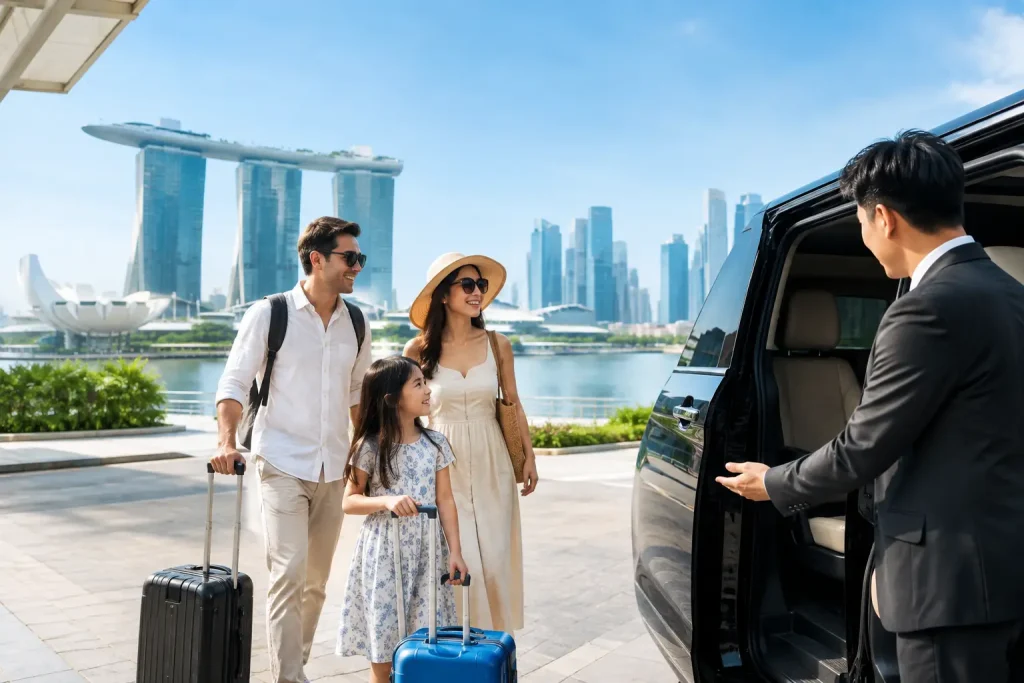
Once the booking is confirmed, the operator schedules a suitable driver and vehicle for your route. On travel day, the driver picks you up at the agreed location, whether that is a home, hotel, office, airport, or ferry terminal. From there, the vehicle proceeds toward the checkpoint, clears border formalities, and continues directly to your destination in Malaysia, or the reverse if you are traveling toward Singapore.
That is the main difference from public transport. You are not booking a seat on a route. You are booking a door-to-door transport service built around your trip.
What happens before pickup
Most of the work in a private border transfer happens before the vehicle even arrives. A reliable operator confirms the essentials early so there is less room for confusion later. Pickup time is one of the biggest factors because border traffic changes by hour, day, school holiday period, and public holiday season.
If you are heading to the airport, a business meeting, or a ferry connection, the timing should include a realistic buffer for immigration and road congestion. If your trip is more flexible, you may choose a time that avoids peak movement periods. A good transfer service will usually advise based on route experience rather than leaving all planning to the passenger.
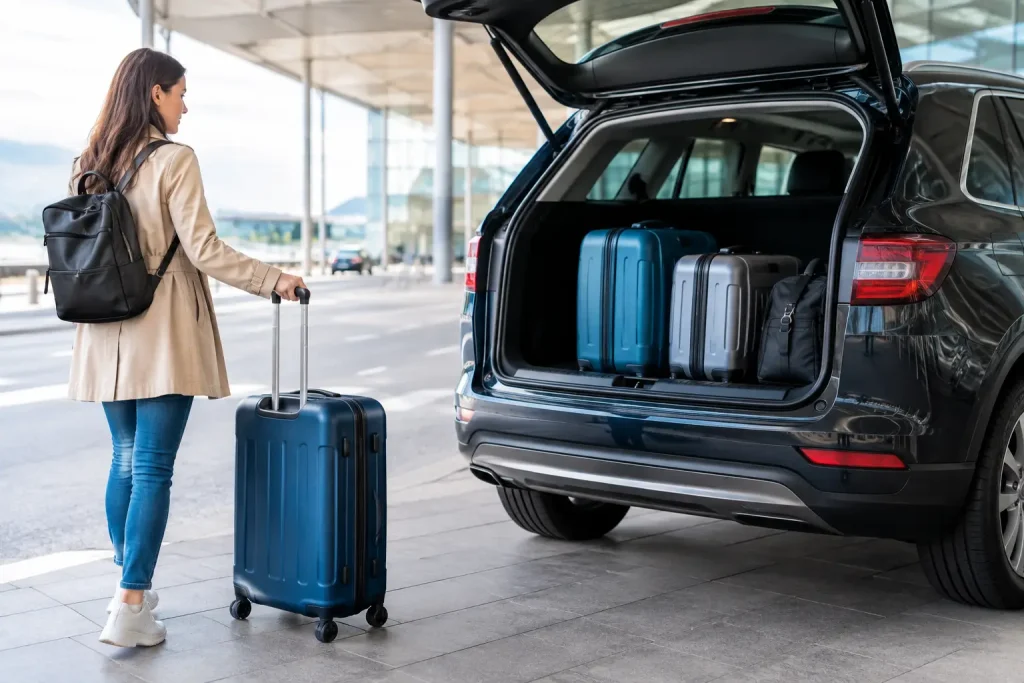
Passenger count and luggage details also affect the booking. This is not just about comfort. It determines whether the vehicle has enough room for people and bags without creating a cramped ride. For families and groups, that can be the difference between a straightforward journey and a stressful one.
Some travelers also need specific arrangements, such as airport pickup, return transfers, child passengers, or multiple stops. These should be stated during booking, not added casually at the last minute. Cross-border operations depend on planning, and changes can affect vehicle assignment and timing.
The pickup and drive to the checkpoint
At pickup, the driver meets you at the arranged location and loads your luggage. For many travelers, this is where the practical value becomes obvious. There is no need to move bags between train stations, bus terminals, or multiple taxis. Everyone in your party starts the trip together in one vehicle.
The driver then takes the planned route to the checkpoint. For Singapore-Malaysia transfers, this generally means using the land border crossing appropriate to the route and traffic conditions. The experience is more controlled than public transport, but it is still affected by real-world border volume. A private transfer reduces travel friction, but it does not remove immigration procedures or traffic buildup.
That distinction matters. Some travelers expect a private ride to mean no waiting at all. In practice, the benefit is not that the border disappears. The benefit is that you keep the same transport arrangement throughout the crossing, with direct continuation to your destination after clearance.
Immigration and checkpoint procedures
This is the part many first-time travelers ask about when they want to know how private border transfers work. The short answer is that immigration still applies exactly as it would with any legal border crossing. Passengers must carry valid travel documents, meet entry requirements, and complete any required checks.
Depending on route rules, checkpoint flow, and operational procedures, passengers may need to remain with the vehicle through certain stages or disembark for immigration clearance. The exact process can vary. That is why experienced cross-border drivers matter. They know the standard flow, understand the route procedures, and guide passengers on what to expect at each stage.
Travel documents remain the passenger’s responsibility. A private transfer service can organize the transport side efficiently, but it cannot fix passport issues, visa problems, or denied entry. If one passenger in a group has incomplete documents, the entire trip may be delayed.
For that reason, it is smart to check passports, entry rules, and any destination-specific requirements before departure. This is especially important during school holidays, festive seasons, and periods when travel rules are updated.
Why private transfers feel faster even when traffic is heavy
Private border transfers are often chosen for speed, but the real advantage is efficiency rather than magic. You still share the road with everyone else. If border traffic is heavy, your vehicle will face delays too.
What you save is the time and uncertainty around transfers. You are not waiting for a bus departure, standing in a taxi line, switching between stations, or trying to coordinate multiple bookings on both sides of the border. The trip is organized as one service, which usually makes it more predictable and less tiring.
This matters even more for business travelers, families with young children, elderly passengers, and groups carrying shopping bags or holiday luggage. In those cases, convenience is not a small extra. It is the main reason to book privately.
Vehicle types and who private transfers suit best
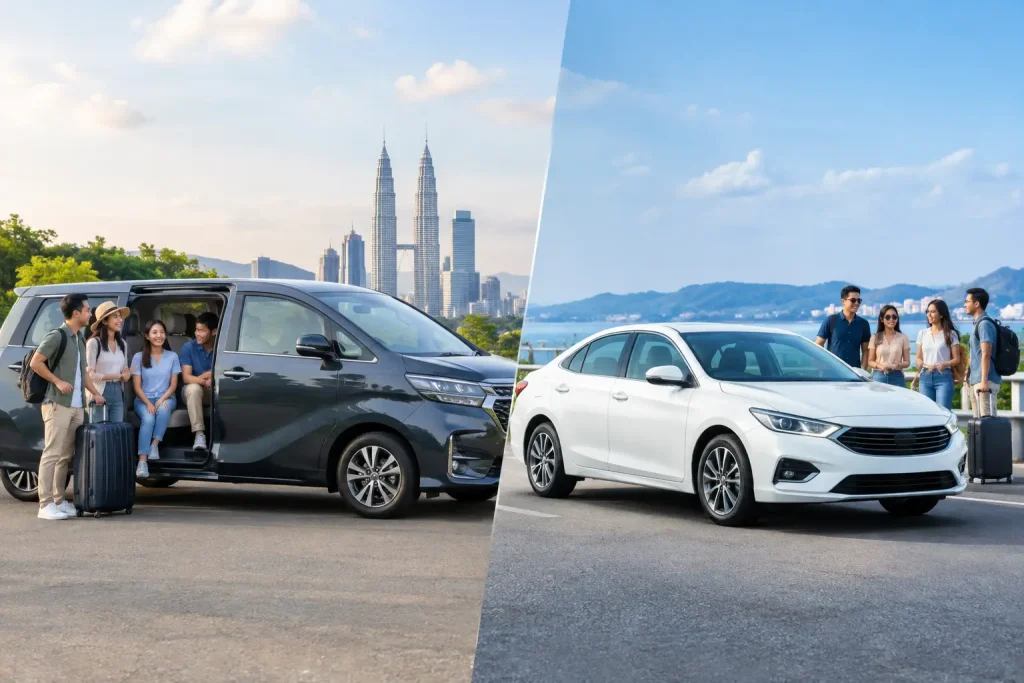
Private border transfers are usually offered in several vehicle categories, such as standard cars, MPVs, and larger vans. The right option depends on passenger count, luggage size, and the level of comfort you want for the distance involved.
A couple heading to Johor Bahru for a short stay may only need a standard private car. A family traveling to Desaru or Malacca may prefer an MPV for extra luggage room and easier seating. Corporate travelers often choose private transfers because they need punctual pickup, direct routing, and a quieter environment than public transport allows.
This type of service also works well for airport arrivals. Instead of landing in Singapore and then figuring out the next leg into Malaysia, travelers can pre-arrange a car that continues the journey with minimal coordination on arrival. The same applies in reverse for passengers returning from Malaysia to catch a Singapore flight.
Pricing and what affects the cost
Private border transfers cost more than mass transit, and that is expected. You are paying for a dedicated vehicle, direct routing, driver coordination, and door-to-door convenience rather than a shared seat.
Pricing usually depends on route distance, vehicle type, pickup time, passenger count, luggage needs, and whether the booking is one-way, round-trip, or hourly charter. Holiday periods and unusual pickup hours may also affect rates. If your trip includes long-distance destinations such as Kuala Lumpur, Genting Highlands, or Penang, the vehicle and scheduling requirements are naturally different from a short transfer to Johor Bahru.
The useful way to compare cost is not against the cheapest bus fare. It is against the total effort of arranging the full trip yourself. For groups, private transfers can also make more financial sense than many travelers expect, especially when the fare is shared across several passengers.
How to make your transfer smoother
The best private transfer experience usually comes from giving accurate details upfront. Exact addresses, flight information, passenger count, and realistic luggage details help avoid delays. If you are traveling with children, elderly relatives, or anyone with mobility concerns, mention that early.
It also helps to be ready on time. Border traffic changes quickly, and a late start can push your trip into a busier window. If you have an appointment, flight, hotel check-in, or ferry departure, build in buffer time instead of planning for a perfect road.
For travelers who want a direct Singapore-Malaysia journey without piecing together each leg themselves, services like SGMYTRIPS are built around that practical need. The value is simple: one booking, one vehicle, one coordinated trip.
Private border transfers work best when you want the crossing to feel managed rather than improvised. If comfort, time control, luggage space, and direct pickup matter to you, that is usually the point where private transport becomes the easier choice.