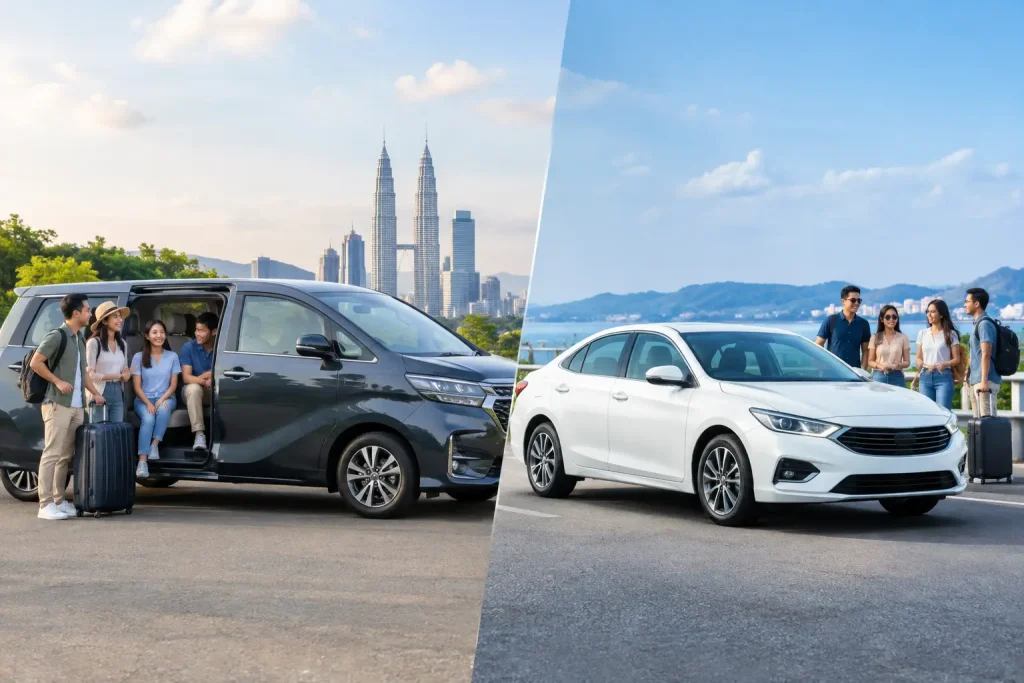
A transfer can look simple when you are only comparing prices on a booking page. The real difference shows up later – at pickup, at the border, and when everyone is trying to fit themselves and their bags into a vehicle that is too small. If you are figuring out how to choose transfer vehicle options for a Singapore-Malaysia trip, the best choice usually comes down to four things: passenger count, luggage, route, and how much flexibility you need.
For cross-border travel, the vehicle is not just a ride. It affects how quickly your group can move, how comfortable the journey feels, and whether the trip starts smoothly or turns into a logistics problem. A family heading to Legoland, a business team going to Kuala Lumpur, and a couple traveling light to Johor Bahru do not need the same setup.
How to choose transfer vehicle for your trip
Start with the actual trip, not the vehicle name. Many travelers book based on labels like sedan, MPV, or van without checking whether that category fits their group in real conditions. A vehicle that works for four adults on a city ride may not work for four adults crossing the border with large suitcases, strollers, or shopping bags.
The most reliable way to choose is to match the vehicle to your travel load. Count passengers honestly, include children who need seats, and think about luggage in full. Then consider the route length. A short transfer to Johor Bahru may allow less cabin space than a longer ride to Malacca, Kuala Lumpur, or Genting Highlands, where comfort matters more.
Group size matters, but usable space matters more
Passenger count is the first filter, but it should not be the only one. A five-seater is not always the right answer for five passengers. If all five are adults and each person has a suitcase, the trip can become cramped very quickly.
For couples or solo travelers with light luggage, a standard private car is often enough. It keeps the booking simple and cost-efficient. For small families, airport pickups, or groups carrying more bags, an MPV usually makes more sense because it gives extra room without moving to a much larger vehicle than necessary.
Bigger groups should think beyond seats alone. If everyone needs to travel together, a larger vehicle avoids splitting into two cars, which can complicate coordination at pickup and drop-off. This is especially useful for family groups, colleagues, or travelers with elderly passengers who benefit from staying in one vehicle from start to finish.
Luggage is where many bookings go wrong
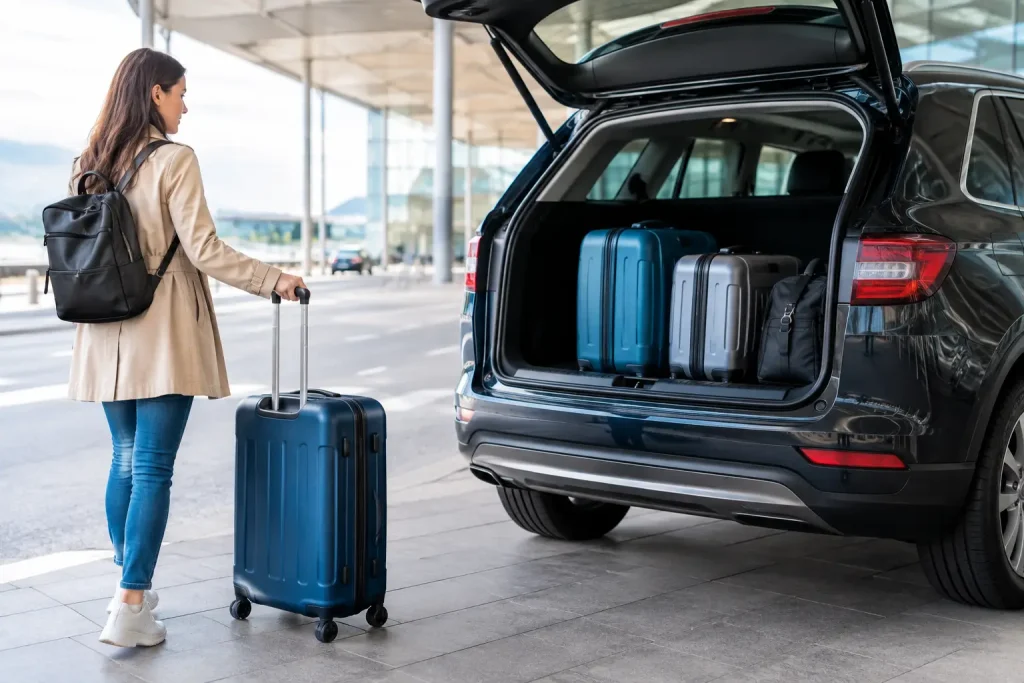
When people choose the wrong transfer vehicle, luggage is often the reason. It is easy to underestimate what you are bringing, especially for airport runs, family travel, or weekend shopping trips.
A good rule is to think in terms of large suitcases, carry-ons, and bulky extras. Strollers, foldable wheelchairs, golf bags, cartons, and baby gear all take up meaningful space. If you are traveling after a holiday, event, or business trip, you may return with more bags than you started with.
This is why MPVs and larger private transfer vehicles are popular for cross-border travel. They give more practical luggage capacity and reduce the chance of last-minute repacking at pickup. If your group is already near the seating limit, moving up one vehicle category is usually the safer decision.
Comfort depends on route length and passenger profile
Not every trip requires the same level of comfort. If the ride is short and direct, passengers may tolerate a tighter fit. For longer trips, limited space becomes more noticeable, especially after immigration clearance and highway travel.
A transfer to nearby Johor destinations may be manageable in a standard private car for a small group. A longer route to Kuala Lumpur, Malacca, Desaru, Cameron Highlands, or Penang usually benefits from more legroom and easier seating. The longer the journey, the more valuable extra cabin space becomes.
Passenger profile matters too. Families with young children often need room for bags, snacks, and easier movement. Elderly passengers may need a vehicle with easier entry and exit. Business travelers may prefer a premium car for a quieter, more presentable ride, especially when meeting clients or moving between airport and hotel.
Premium is not always necessary, but sometimes it is practical
Some travelers choose premium vehicles for image, but there is also a practical reason. A premium private car can offer a quieter ride, better seating comfort, and a more suitable experience for corporate travel, VIP pickups, or long-distance transfers where passengers want to arrive less tired.
That said, premium is not automatically the best option. If your main need is luggage capacity for a family group, an MPV may serve you better than a premium sedan. The right choice depends on whether comfort, presentation, or cargo space is the top priority.
Border travel changes what vehicle works best
Cross-border transfers are different from regular city rides. That is one reason how to choose transfer vehicle options for Singapore-Malaysia travel should be based on the full journey, not only the price.
Border crossings involve checkpoints, timing, and possible waiting periods. During peak weekends, school holidays, and public holidays, travel time can stretch. In those cases, a slightly larger or more comfortable vehicle often feels worth it. If your group includes children, older relatives, or passengers who do not handle delays well, extra space can make the ride much easier.
Door-to-door service also changes the equation. If the driver is picking you up from home, hotel, office, or airport and taking you directly to another destination, you avoid switching between taxis, buses, and walking segments. That convenience is part of the vehicle decision. A private transfer should fit the whole route with minimal friction.
Match the vehicle to the purpose of the trip
Different trip types call for different vehicle choices. An airport transfer usually needs more luggage room. A business trip may prioritize punctuality, presentation, and quiet seating. A family vacation may need both passenger space and storage. A day trip with multiple stops may benefit from an MPV or larger vehicle because people are getting in and out throughout the day.
If you are heading to places like Legoland Malaysia, Desaru, Genting Highlands, or Port Dickson, think about what the day includes. Are you carrying overnight bags, child gear, shopping, or event items? Are you returning the same day or later? A transfer vehicle should support the actual plan, not only the drive itself.
What to check before booking
Before you confirm a vehicle, ask the practical questions that affect fit and timing. How many adults and children are traveling? How many large and small bags will you have? Is there any bulky equipment? Is the trip one-way, round-trip, or hourly charter? Is pickup from the airport, hotel, or residential address?
These details help match you to the right vehicle category from the start. They also reduce the risk of delays or vehicle changes later. For private transfers, accuracy matters more than speed when making the booking.
If you are unsure between two options, choosing the slightly larger vehicle is often the smarter move. The price difference is usually smaller than the inconvenience of a tight cabin, luggage overflow, or splitting the group. For cross-border trips, extra space is rarely wasted.
One practical advantage of booking with an experienced provider such as SGMYTRIPS is that the service is built around Singapore-Malaysia routes, so vehicle recommendations are based on common border travel needs rather than generic local taxi assumptions.
Choose for the trip you are actually taking
The best transfer vehicle is not the cheapest one on the list or the largest one available. It is the one that fits your passenger count, luggage, route, and comfort expectations without creating problems on travel day.
If your trip is short, light, and simple, a private car may be enough. If you are traveling as a family, carrying several bags, or heading farther into Malaysia, an MPV or larger private vehicle is often the better fit. And if presentation or ride quality matters, premium can be the right choice.
A good booking feels uneventful in the best way. Everyone fits, the bags fit, pickup is straightforward, and the journey runs as planned. That is usually the clearest sign you chose the right vehicle.