A Singapore-to-Malaysia trip can look simple on a map, but the transport plan changes quickly once you add luggage, children, flight times, hotel check-in, and border traffic. Choosing a one way or roundtrip transfer early helps you match the vehicle and schedule to the way you actually travel, rather than forcing your itinerary around transport later.
For some travelers, a one-way private transfer is the most practical choice because the return date, pickup point, or onward destination is still undecided. For others, booking the outbound and return journeys together provides more certainty, especially during weekends, school holidays, and busy travel periods. The better option depends on your schedule, group size, and how much flexibility you need.
What Is a One-Way Private Transfer?
A one-way transfer takes you from one confirmed pickup point to one confirmed destination. For cross-border travel, that may mean a home, hotel, office, or airport in Singapore to Johor Bahru, Malacca, Kuala Lumpur, Desaru, or another Malaysian destination. It can also work in the opposite direction, from Malaysia to Singapore.
This arrangement suits travelers whose plans continue beyond the first destination. You may be arriving in Kuala Lumpur and flying home from a different airport, staying with family before continuing to another city, or using a separate transport arrangement for your return. A one-way booking gives you the freedom to organize each leg independently.
Private point-to-point transport is particularly useful when public options would require several steps. Instead of arranging a ride to a terminal, handling luggage at the border, and finding another vehicle after arrival, your group stays in the same pre-booked vehicle for the journey. Border clearance times can still vary, but there is no need to coordinate a change of buses or taxis in the middle of the trip.
When one-way service makes sense
A one-way transfer is often the right choice when your return timing is uncertain. This is common for business travelers with meetings that may run long, tourists building a flexible multi-city itinerary, and passengers arriving on flights that could change.
It is also useful for open-jaw travel. For example, you may travel from Singapore to Malacca, continue to Kuala Lumpur by train or domestic transport, then fly out from Kuala Lumpur International Airport. Booking a return ride to Singapore in that situation would not add value.
One-way transport can be practical for relocation, extended stays, ferry connections in Mersing or Tanjung Gemok, and travel where the number of passengers changes on the return leg. If four people travel into Malaysia but only two return to Singapore, separate bookings may allow for a more suitable vehicle choice each way.
When a Roundtrip Transfer Is the Better Fit
A roundtrip transfer includes both the outbound and return journey, usually with confirmed dates, pickup times, and locations. It is a practical option for travelers going to Malaysia for a short break, a day trip, a corporate visit, a theme park outing, or a weekend stay.
The main benefit is planning certainty. Your return transport is already arranged before you leave Singapore, so you are not searching for availability while away from home or trying to coordinate a pickup during a busy period. This matters when your return is tied to a flight, hotel checkout, work schedule, or a child’s school timetable.
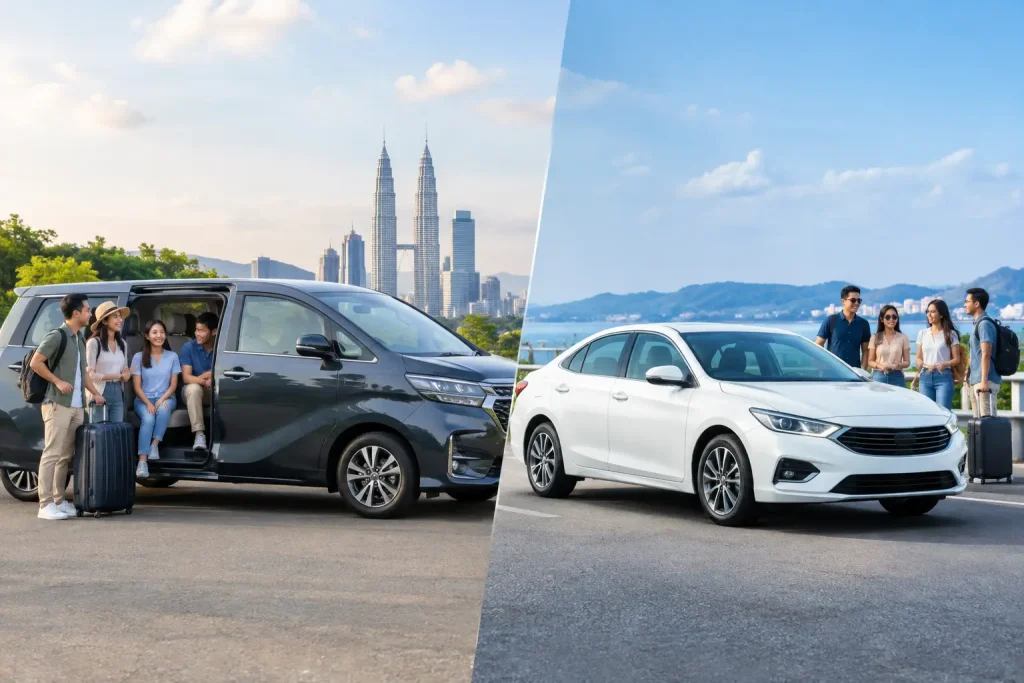
For families and groups, a roundtrip booking also keeps the logistics consistent. You can plan for the same passenger count, similar luggage needs, and appropriate vehicle category for both legs. A car may suit a couple with light bags, while an MPV or larger private vehicle can be more comfortable for families, elderly passengers, strollers, shopping bags, or multiple suitcases.
Good situations for roundtrip travel
Roundtrip service works well for a same-day Johor Bahru visit, a weekend in Desaru, a Legoland Malaysia trip, or a planned stay in Malacca. It is also a sensible choice for business travelers attending scheduled meetings in Johor Bahru or Kuala Lumpur, where a fixed return journey reduces last-minute coordination.
Airport-related travel is another common case. If you are leaving Singapore for a holiday in Malaysia and returning in time for a flight, a confirmed return transfer creates a clear schedule from hotel pickup to airport drop-off. Leave an appropriate time buffer for traffic, the border, airline check-in requirements, and peak-hour congestion.
A roundtrip arrangement does not always mean the driver waits throughout your trip. The outbound and return rides are generally planned as separate journeys, with a scheduled pickup for each. Confirm the return date, exact pickup address, and desired time when making the reservation.
One-Way vs. Roundtrip Transfer: The Real Trade-Offs
The decision is less about which option is universally better and more about how fixed your itinerary is. A roundtrip transfer offers convenience and advance coordination. A one-way transfer offers flexibility when the second half of the journey is unknown.
Price should be considered carefully, but it should not be the only factor. The cost of private cross-border transportation can depend on the route, vehicle type, number of passengers, travel date, pickup time, luggage requirements, and destination. A roundtrip booking may simplify planning for both journeys, while two separate one-way bookings can make more sense when the routes or vehicle needs are different.
Availability is another practical consideration. Singapore-Malaysia routes are often busiest on Friday evenings, Sunday afternoons, public holidays, long weekends, and school vacation periods. If your return is on a high-demand date, booking it in advance can reduce uncertainty. If your return date is genuinely open, a one-way journey prevents you from committing to a schedule you may need to change.
Privacy and comfort are the same core advantages in either format. Your party travels together in a private vehicle, with a pickup and drop-off planned around your itinerary. For travelers carrying valuables, traveling with young children, or meeting clients, this can be more convenient than sharing public transport or managing several separate rides.
Details to Confirm Before Booking
A clear reservation prevents avoidable delays. Start with the full pickup address, destination address, travel date, and preferred pickup time. For hotels, provide the hotel name and lobby pickup instructions if relevant. For residences and offices, include enough detail for the driver to locate the pickup point efficiently.
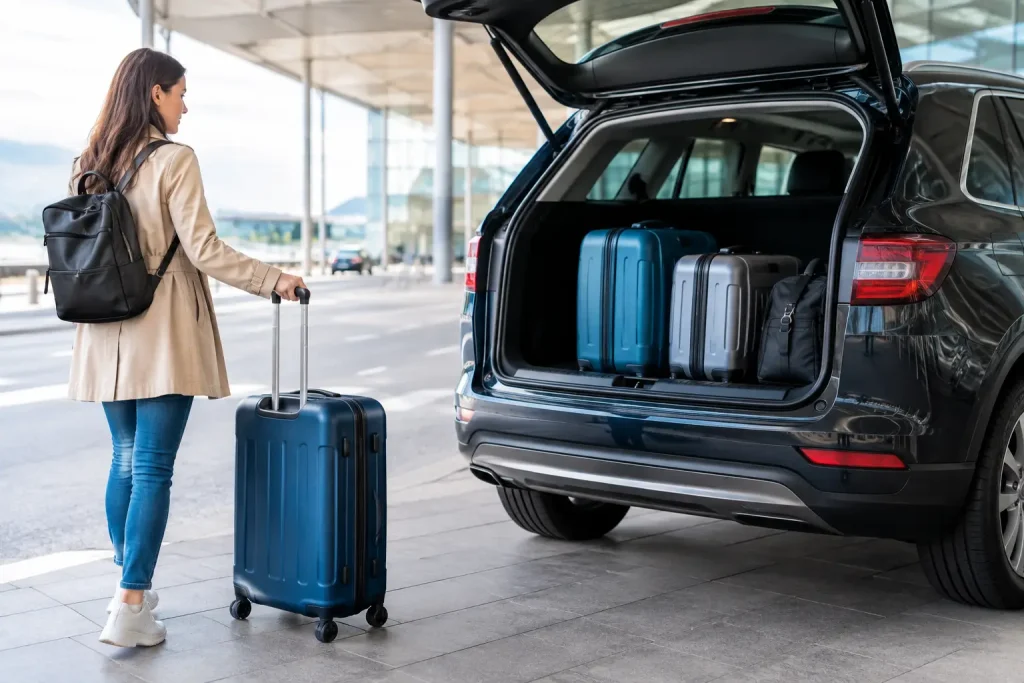
Share the number of passengers, including children, and describe the luggage honestly. Large suitcases, golf bags, folded strollers, wheelchairs, or bulky shopping items can affect the vehicle required. Booking a vehicle that is too small may create delays or require a last-minute change.
For airport pickups, provide the flight number and scheduled arrival time. For airport drop-offs, state the flight departure time and terminal if known. Cross-border journeys require time allowances that are not always predictable, particularly during peak traffic periods.
Every passenger should carry the required valid travel documents for entry and exit. A private transfer can make the journey more direct, but it does not replace immigration requirements. Travelers remain responsible for passports, visas where applicable, and any current entry conditions.
It is also worth confirming your return pickup plan in plain terms. If you are booking a roundtrip, specify whether the driver should collect you from the same hotel, a different attraction, a ferry terminal, or another address. A return from Legoland Malaysia, for example, needs a different pickup instruction than a return from a hotel in Johor Bahru.
Choosing the Right Vehicle for Both Directions
Vehicle selection should reflect the full trip, not only the outbound ride. Think about how much luggage you will have after shopping, whether you expect to carry items from a theme park or beach resort, and whether all passengers will return together.
A standard private car can work well for a small party with moderate luggage. An MPV is usually more practical for families and small groups that want additional seating or baggage space. Premium private car options may suit business travelers, client pickups, or passengers who want a more refined travel experience.
If your needs differ between the two legs, say so during booking. You might travel to Malaysia with several relatives and return as a smaller group, or arrive with luggage but return with extra shopping bags. Separate one-way arrangements can be more suitable in those cases than a standard roundtrip setup.
Book Around Your Actual Itinerary
The best transfer is the one that removes steps from your day. SGMYTRIPS can support pre-booked private cross-border travel for one-way and return journeys, with pickup and destination details arranged before departure. The key is to book based on the route you will take, the people traveling with you, and the time you need to be there.
If your return date and location are fixed, a roundtrip transfer gives you a dependable plan for both sides of the border. If your itinerary is still taking shape, choose a one-way transfer and keep the next leg open. Either way, confirm the details early so your transport supports the trip instead of becoming another task to manage.