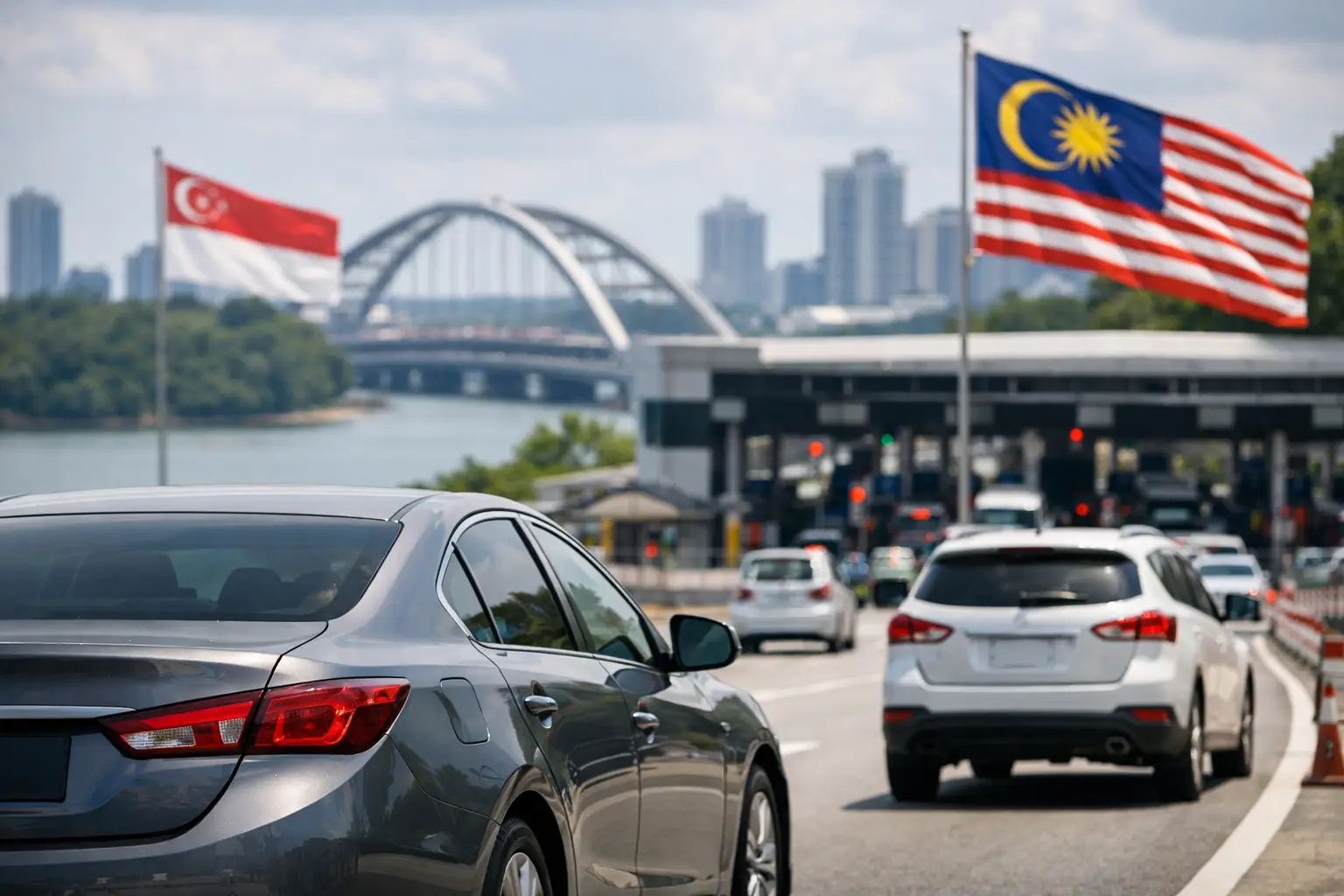
A Singapore-registered car can drive into Malaysia, but the trip is not as simple as reaching the Woodlands or Tuas checkpoint with a full tank. The answer to can private cars enter Malaysia is yes, provided the vehicle, driver, and passengers meet the entry requirements. For a short Johor Bahru trip, a weekend in Malacca, or a longer drive to Kuala Lumpur, preparation matters because border delays can become much longer when documents or vehicle registration details are incomplete.
For travelers who prefer to drive themselves, this guide covers the practical requirements. For those traveling with children, elderly family members, heavy luggage, or a larger group, it also explains why a pre-booked cross-border transfer can be the more straightforward option.
Can Private Cars Enter Malaysia? Yes, With the Right Requirements
Private cars may enter Malaysia through approved land checkpoints, including the Causeway and Tuas Second Link. Singaporeans and other eligible visitors still need a valid passport and must meet Malaysia’s current immigration entry conditions. The driver must also be legally permitted to drive, and the vehicle must be properly registered, insured, and authorized for road use.
The rules are different for a private vehicle used by its owner and a vehicle carrying paying passengers. A private car can bring family members or friends into Malaysia. However, a driver should not assume that any privately owned vehicle can operate as a paid cross-border transport service. Commercial cross-border passenger transport requires the appropriate licenses, permits, and operating arrangements.
This distinction matters when comparing self-drive travel with a private transfer. A licensed, pre-arranged transfer is designed to carry passengers across the border as a service. A personal vehicle is for private use and remains the driver’s responsibility throughout the journey.
Documents to Prepare Before Driving to Malaysia
Bring original, valid documents rather than relying only on photos stored on your phone. Border officers may request supporting information, particularly if the registered owner is not traveling with the car.
The driver should have a valid passport, driving license, and vehicle registration details. The car must have valid insurance that covers driving in Malaysia. Check the policy wording before departure, as basic coverage, roadside assistance, accident procedures, and claims support can differ once you cross the border.
If you are driving a car owned by someone else, keep a signed authorization letter from the owner. It should identify the vehicle, the driver, the travel dates, and the owner’s contact details. This may not be requested on every trip, but it is a sensible safeguard when the vehicle registration does not match the driver’s name.
Every passenger needs their own valid travel document. Families should also check passport validity well before a school holiday or long weekend, when checkpoint traffic is usually heavier. A missing passport or an entry issue for one passenger can disrupt the plans of everyone in the car.
VEP Registration for Singapore-Registered Cars
Singapore-registered vehicles entering Malaysia are generally required to have a valid Malaysian Vehicle Entry Permit, commonly called a VEP. The permit is associated with a VEP RFID tag, which is used to identify the vehicle when it enters Malaysia.
Do not leave this until the day before travel. VEP registration and RFID tag processes can involve application approval, an appointment or installation arrangement, and confirmation that vehicle details are correct. If your vehicle details change, such as after a transfer of ownership or a plate update, review whether the permit information also needs to be updated.
Malaysia’s enforcement procedures and technical requirements can change. Before each trip, especially if you have not driven in for several months, confirm the current VEP status, RFID requirements, fees, and any notices affecting foreign-registered vehicles. Keeping the relevant vehicle information accessible will help if you are asked for it at the border.
Plan for Tolls, Fuel, and the Drive After the Checkpoint
Getting through immigration is only the first part of the trip. Malaysia uses toll roads extensively, particularly on routes from Johor Bahru to Malacca, Kuala Lumpur, Desaru, and other major destinations. Make sure your payment method is ready and has enough balance before leaving Singapore.
Fuel planning also deserves attention. Rules on fuel purchases by foreign-registered vehicles, including access to subsidized fuel, can be subject to restrictions. Do not build your trip around assumptions about where or what you can refuel after crossing. Check the current rules and plan enough fuel for the route you intend to take.
Driving conditions also change quickly after the border. Traffic around Johor Bahru can be dense, especially on Friday evenings, public holidays, and return journeys to Singapore. On longer routes, account for rest stops, tolls, unfamiliar exits, rain, and the time needed to park at your hotel or destination.
If you are traveling to Kuala Lumpur on a tight schedule, allow more than the map’s estimated driving time. A smooth border crossing is never guaranteed, and a short delay at immigration can affect airport check-in times, meeting schedules, or hotel arrival plans.
Customs Rules Still Apply to Private Cars
A private vehicle does not bypass customs procedures. Malaysia and Singapore both regulate what travelers can carry across the border. Alcohol, tobacco products, controlled medicines, food items, large quantities of goods, and items intended for resale can attract duties, restrictions, or declaration requirements.
Pack with the assumption that officers may inspect the car. Keep luggage organized, carry prescriptions for necessary medication, and avoid transporting items for other people when you do not know exactly what they are. A crowded trunk filled with shopping bags may be normal for a family outing, but it can take longer to inspect if officers need to check it.
The same principle applies on the return trip to Singapore. Plan your purchases according to Singapore’s import allowances and declaration rules rather than treating the return drive as a simple continuation of the vacation.
When Self-Driving Makes Sense
Driving your own car is often practical when you already have a compliant vehicle, are comfortable with Malaysia’s roads, and want complete control over your schedule. It can work well for travelers visiting several places in Johor or for families carrying items that would be inconvenient on public transportation.
It may be less attractive when the trip involves multiple pickups, a very early flight, a one-way journey, or a group that wants to rest instead of managing traffic. The cost calculation should include more than fuel. Consider parking, tolls, vehicle wear, border waiting time, insurance coverage, and the fact that one person must remain focused on driving.
For a short day trip, those factors may be manageable. For a larger group going from Singapore to Kuala Lumpur, Genting Highlands, Malacca, or a ferry terminal such as Mersing or Tanjung Gemok, they can add up quickly.
A Private Transfer Removes the Vehicle Administration
A pre-booked cross-border transfer is useful when you want door-to-door transport without handling VEP arrangements, toll planning, driving directions, or parking. The driver picks up your group in Singapore and continues to your Malaysian destination in a vehicle suited to the passenger count and luggage requirements.
This is particularly helpful for families with strollers, travelers carrying several suitcases, business visitors traveling together, and groups arriving at the airport. Rather than coordinating taxis on both sides of the border or changing buses with luggage, everyone remains in the same vehicle through the crossing.
SGMYTRIPS provides pre-arranged private car and MPV transfers for Singapore-Malaysia routes, including Johor Bahru, Kuala Lumpur, Malacca, Desaru, and other major destinations. Booking in advance gives the operator time to confirm pickup details, passenger numbers, luggage needs, and the most suitable vehicle category.
Before You Leave Singapore
Use a final check the night before: passports, driving license, vehicle registration information, Malaysia-valid insurance, VEP status, toll payment balance, and any medication or customs declarations. Leave extra time for the checkpoint, particularly during school breaks, festive periods, and Friday or Sunday travel peaks.
A private car can absolutely be a good way to enter Malaysia when the paperwork is in place and the driver is prepared. If the purpose of the trip is to arrive rested, keep the group together, and avoid managing a vehicle across two countries, arranging the transport before departure can be the easier decision.