A 9:00 a.m. departure from Singapore does not always mean a 9:00 a.m. arrival in Johor Bahru. Border traffic, incomplete travel details, late passengers, and poorly planned pickup points can all add time before your trip has properly started. Knowing how to avoid transfer delays helps you protect your schedule, especially when traveling with family, catching a flight, attending a meeting, or heading to a hotel check-in.
For Singapore-Malaysia travel, the most reliable approach is simple: arrange the right vehicle early, provide accurate details, and leave enough time for the border. Private transport reduces many common friction points, but preparation still matters.
Book Before Peak Travel Periods
Last-minute transportation is one of the most common reasons travelers face avoidable delays. During weekends, public holidays, school breaks, year-end travel periods, and major events, demand for cross-border vehicles rises quickly. A late booking may leave you with fewer vehicle choices, less flexible pickup times, or no suitable option for your group and luggage.
Reserve your transfer as soon as your travel dates are confirmed. This is particularly useful for airport pickups, early morning departures, trips to Legoland Malaysia, ferry terminals in Mersing or Tanjung Gemok, and longer journeys to Kuala Lumpur, Malacca, Genting Highlands, or Penang. These trips often involve fixed check-in, flight, or activity times that are difficult to move.
Booking early does not eliminate border congestion, but it gives your transport provider more room to plan the pickup and assign a vehicle that fits your party. For families and groups, an MPV or larger private vehicle can also prevent the need to divide passengers and bags across separate cars.
Give Complete Pickup and Passenger Details
A driver cannot plan efficiently around information that is missing or unclear. When making a booking, provide your exact pickup address, preferred departure time, destination, passenger count, and luggage quantity. Include useful details such as a hotel lobby name, condominium tower, flight number, cruise terminal, or whether you are traveling with young children or elderly passengers.
For airport pickups, share the scheduled arrival time and flight number rather than estimating when you might exit the terminal. Flight arrivals, baggage collection, immigration clearance, and customs checks can vary. With the right flight details, your provider can coordinate the pickup more realistically.
Passenger documentation matters just as much. Every traveler should carry a valid passport and meet the entry requirements for the country they are entering. Before departure, check that passports are accessible, not packed inside a suitcase, and have sufficient validity for your trip. Travelers who require visas, permits, or other approvals should confirm these before the transfer date.
A single passenger with missing or incorrect documentation can delay the entire vehicle at the checkpoint. It may also require the group to change plans unexpectedly.
How to Avoid Transfer Delays on Pickup Day
The pickup is the first point where a carefully planned transfer can lose time. Be ready at the agreed location a few minutes before the scheduled departure. This is more useful than waiting for the driver to arrive and then starting to pack, settle a hotel bill, or search for passports.
Keep phones charged and available. If your pickup location is difficult to access, such as a large mall, event venue, airport, or apartment complex with multiple entrances, follow the agreed meeting instructions closely. Drivers may be restricted from waiting in certain loading zones, and missed calls can create unnecessary back-and-forth.
Before the vehicle arrives, make sure all passengers are present, luggage is packed, and travel documents are within reach. If you are staying in a hotel, allow time to bring bags down from the room and check out. For a group, nominate one person to confirm that everyone is ready. This small step avoids the familiar situation where a car is waiting while one traveler is still looking for a charger or jacket.
If your plans change, inform the transport provider as early as possible. A revised pickup time may be possible depending on vehicle scheduling, but advance notice is always easier to manage than a message sent after the driver has reached the location.
Plan Around Border Traffic, Not Just Driving Time
The distance between Singapore and Johor Bahru can look short on a map. The real travel time depends heavily on immigration traffic. Friday afternoons, Saturday mornings, Sunday evenings, public holidays, and long weekends are typically more congested. School holiday periods can also affect both directions of travel.
When you need to reach a flight, meeting, ferry, or ticketed attraction, do not calculate your schedule based only on normal driving time. Add a realistic buffer for the border, weather, road traffic, and unexpected queues. The right buffer depends on the day and time, but a fixed appointment should always be treated differently from a flexible day trip.
For example, a family traveling from Singapore to Desaru for a resort check-in can usually accept a longer border wait more easily than a business traveler heading to an airport. A passenger catching a ferry from Mersing should leave substantially earlier because missing the departure can affect the whole itinerary.
Early departures can be a practical choice for travelers who want more predictable road conditions. However, there is no time slot that guarantees an empty border. The goal is not to promise a delay-free crossing. It is to build enough flexibility into your schedule that normal variations do not become a missed reservation or rushed arrival.
Choose Door-to-Door Private Transport When Convenience Matters
Multiple transfers create multiple opportunities for delay. A trip involving a taxi to the checkpoint, a public bus across the border, another immigration queue, and a second taxi in Malaysia may cost less in some cases, but it also requires more coordination. This can be difficult when traveling with children, strollers, elderly relatives, large suitcases, or work equipment.
A pre-arranged private transfer keeps the group in one vehicle from pickup to destination. You do not need to move luggage between buses, negotiate fares after crossing, or find a second ride when demand is high. For small groups, the convenience of traveling together can also make the cost more practical than several separate taxis.
This approach is especially helpful for door-to-door trips to hotels, residential addresses, theme parks, business locations, and destinations outside central Johor Bahru. SGMYTRIPS arranges private cross-border transfers for travelers who prefer a scheduled vehicle, direct coordination, and space for passengers and luggage.
There is still a trade-off: private transport cannot bypass immigration procedures or control traffic conditions. What it can do is remove the avoidable delays caused by changing vehicles, unclear meeting points, and unplanned route decisions.
Pack and Load With the Journey in Mind
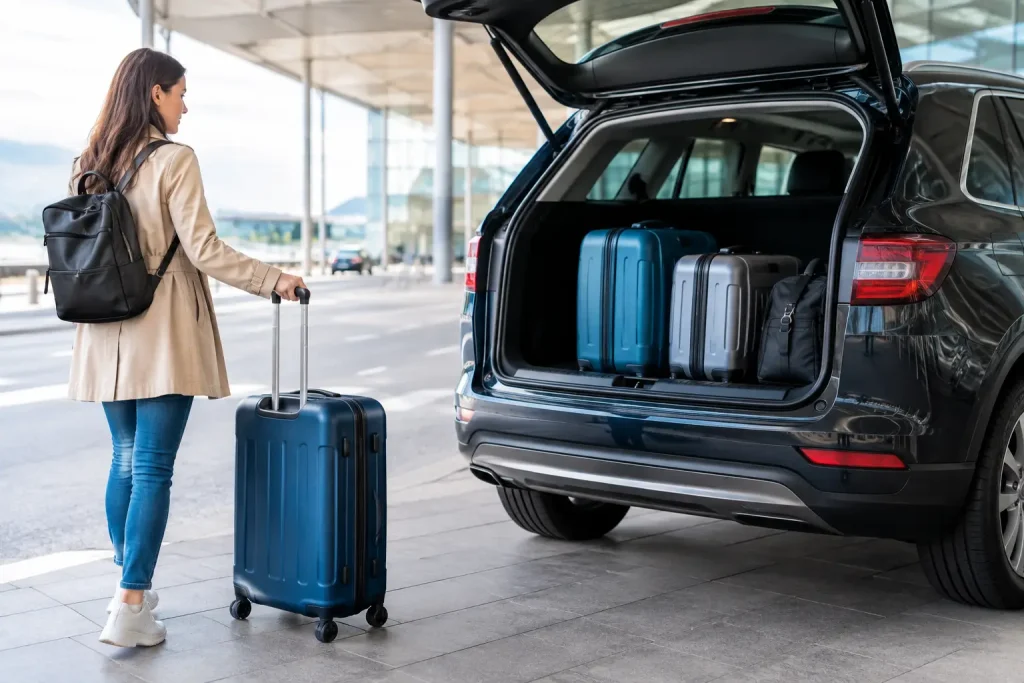
Overloading a vehicle or underestimating luggage can slow down departure and make the ride less comfortable. Be honest about bags when booking, including large suitcases, golf bags, folded strollers, wheelchairs, shopping items, and oversized equipment. A vehicle that fits four passengers may not fit four passengers with four large cases comfortably.
Keep passports, phones, wallets, medication, and essential items in a small carry-on bag. At immigration, you may need to access documents quickly. Avoid placing important items in the deepest part of the trunk under all other luggage.
For trips with children, prepare snacks, water, wipes, and entertainment before leaving. Border queues can be tiring, and stopping to buy supplies after pickup adds time. For longer transfers to Kuala Lumpur, Malacca, Cameron Highlands, or Genting Highlands, consider comfort as well as capacity when selecting the vehicle.
Communicate Early When Your Itinerary Changes
Travel plans change for valid reasons. A flight may arrive late, a meeting may run over, or a hotel pickup may need to move. The key is to communicate as soon as you know there is a change. Early notice gives the transport coordinator a chance to check driver availability, adjust timing, or advise on the best next step.
Do not assume a driver will automatically know about a flight delay unless flight monitoring has been specifically arranged. Send the updated flight information or revised arrival estimate. Likewise, if your group size changes, report it before the vehicle is dispatched. A last-minute additional passenger can create a safety and space problem, not just an inconvenience.
Clear communication is also helpful when traveling during major holiday periods. You may need to accept a wider arrival window because traffic conditions are less predictable. Setting that expectation before the trip prevents unnecessary stress once you are on the road.
Make Time Your Backup Plan
The most effective way to avoid transfer delays is to prepare for the delays you cannot control. Book a suitable vehicle, confirm your details, arrive ready for pickup, and give border travel the time it deserves. These steps turn a cross-border journey from a chain of uncertain handoffs into one coordinated trip.
When your arrival time matters, leave earlier than feels necessary. A little extra time at your destination is far easier to manage than watching the clock from a border queue.