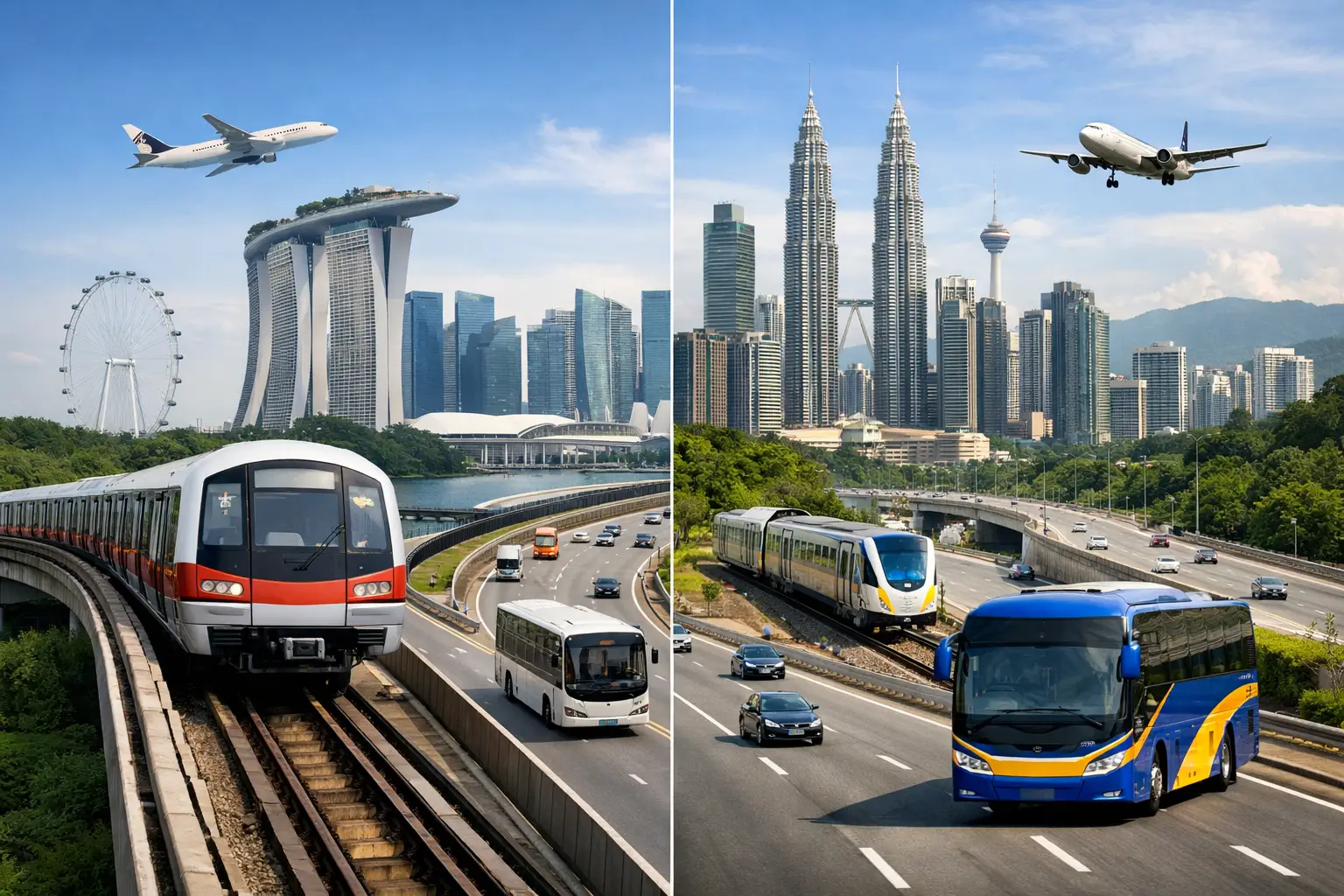
A trip from Singapore to Malaysia can look simple on a map, then turn into a long day once you factor in border clearance, luggage, transfers, and waiting time. That is why a clear singapore malaysia transport comparison matters. The cheapest option is not always the fastest, and the fastest-looking option is not always the easiest when you are traveling with family, clients, or heavy bags.
For most travelers, the real decision is not just how to cross the border. It is how much friction they are willing to deal with. A public bus may cost less, but it usually means fixed pickup points, queues, and less personal space. A private transfer costs more, but it can save time, reduce coordination, and make the whole journey more predictable.
Singapore Malaysia transport comparison by travel type
The best transport option depends on who is traveling, where you are going, and how tightly your schedule is planned. A solo traveler going to Johor Bahru for a casual day trip may accept a bus or train. A family heading to Legoland, a business traveler going to Kuala Lumpur, or a group carrying luggage usually has a different priority.
When comparing transport, it helps to look at five things: total travel time, border process, luggage handling, pickup flexibility, and comfort. These factors affect the actual journey more than the headline fare.
Public bus
Public buses are often the lowest-cost choice between Singapore and Johor Bahru. They are widely used and practical for budget travelers who do not mind walking, waiting, and following fixed routes. If your destination is close to a bus stop and you are traveling light, this can be a workable option.
The trade-off is convenience. You need to get to the departure point yourself, get off for immigration, reboard, and then continue the last leg after arrival. During weekends, holidays, and peak crossing periods, waiting times can increase sharply. For travelers with children, elderly passengers, strollers, or several bags, the savings may not feel worth the extra effort.
Train
The train can be useful for a short cross-border segment, especially for travelers who prefer a structured schedule and want to avoid road congestion on certain stretches. Some passengers like the predictability of rail timing, and the journey itself can feel simpler than a crowded bus.
Still, the train is rarely a complete door-to-door solution. You usually need additional transport before and after the rail segment. That means booking separate rides, managing luggage between stations, and matching your schedule to fixed departure times. If your final destination is not near a station, the total trip can become more complicated than expected.
Self-drive car
Driving yourself gives you control over timing and route choice. It can be practical for frequent travelers who know the border procedures, are comfortable with driving rules on both sides, and prefer having a vehicle during the trip.
The downside is that you are still the one handling navigation, traffic, tolls, parking, and the stress of border queues. On paper, self-drive offers flexibility. In practice, the driver gives up the chance to rest, work, or focus on family during the journey. It also becomes less attractive for visitors unfamiliar with Malaysian roads or for travelers who simply do not want the responsibility.
Flights
For longer routes such as Singapore to Kuala Lumpur, Penang, or other major cities, flights may seem like the obvious fastest option. They can make sense when booked early and when schedules line up well.
But airport travel has its own friction. You need to leave early, check in, clear security, wait for boarding, land, collect bags, and arrange transport again on arrival. For city-center to city-center planning, a flight is not always the time saver it appears to be. If your trip includes multiple people and luggage, the convenience gap between air travel and private ground transport can narrow quickly.
Private car or MPV transfer
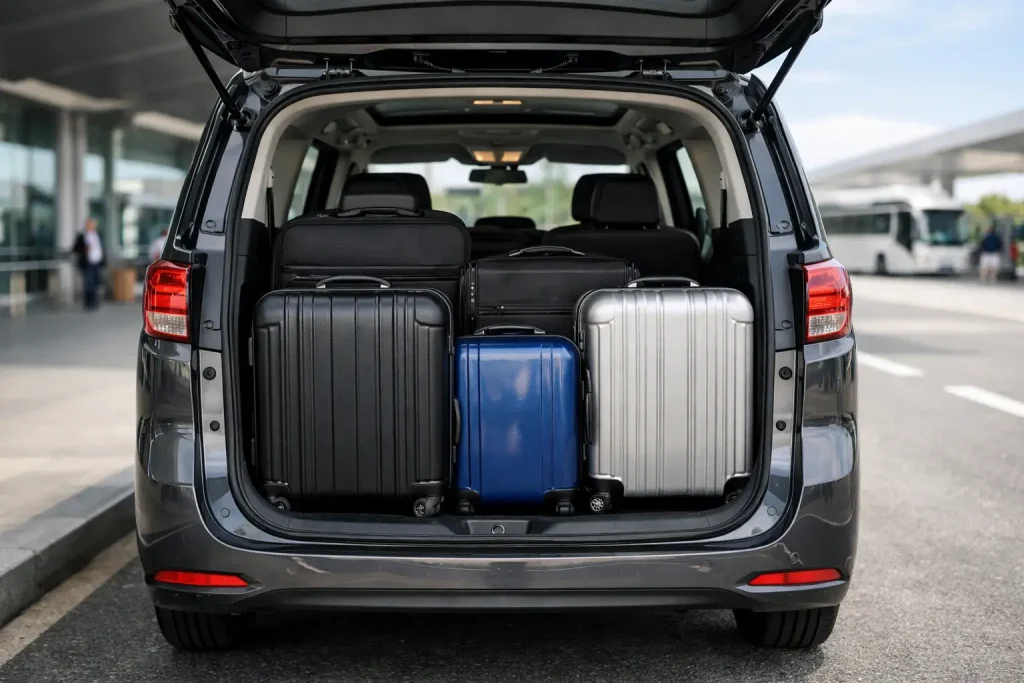
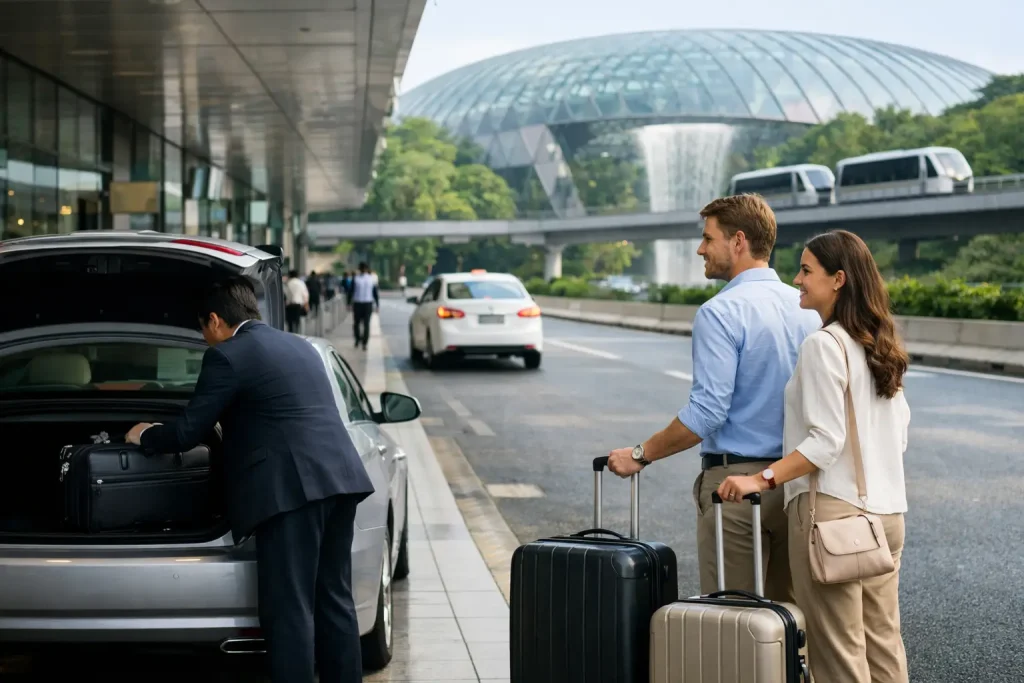
Private transport is the most direct option for travelers who want door-to-door service. You are picked up at your home, hotel, airport, or office and driven straight to your destination without piecing together multiple travel legs.
This matters most on cross-border routes because the border is where many journeys become unpredictable. A pre-booked private transfer reduces the number of moving parts. Instead of managing bus terminals, station transfers, or separate taxi bookings, you stay with one planned arrangement from pickup to drop-off.
What matters more than price
A basic singapore malaysia transport comparison should include cost, but cost alone can be misleading. A bus ticket may look much cheaper than a private car until you add the value of time, the cost of local transfers, and the practical strain of moving a group across several stages.
If you are traveling alone and keeping expenses low is the main goal, public transport can still be the right call. But if you are traveling with three or four people, the math changes. A private MPV may deliver better value per person once you factor in comfort, luggage space, and the fact that everyone arrives together.
Time also has different value depending on the trip. On a leisure day trip, an extra hour may be acceptable. On an airport transfer, business meeting, family holiday, or same-day return plan, delays become much more expensive than the fare difference.
Which option works best for common routes
For Johor Bahru, buses and trains remain common because the route is short and there are many public transport choices. They work best for flexible travelers with light luggage and simple point-to-point needs. Private transfers are better for families, shopping trips, medical visits, and anyone who wants to avoid crowded boarding points and repeated transfers.
For Legoland Malaysia, Desaru, or Malacca, private transport becomes more attractive because the final destination is specific and often not well served by a single simple public route from Singapore. The more direct the destination, the stronger the case for a direct vehicle.
For Kuala Lumpur, the decision usually comes down to flight versus private car. Flights may suit travelers who are comfortable with airport procedures and fixed schedules. Private car service suits those who prefer a direct departure, want to keep luggage with them, or are traveling as a group and want a more controlled trip.
For Genting Highlands, Cameron Highlands, Mersing, Tanjung Gemok, or Port Dickson, private transport is often the more practical choice because these routes can involve multiple connections if handled by public transit. When the destination is less straightforward, simplicity becomes part of the value.
Who should choose private transport
Private transport is not the cheapest category, and that is the point. It is built for travelers who care more about reducing travel friction than cutting the fare to the lowest possible number.
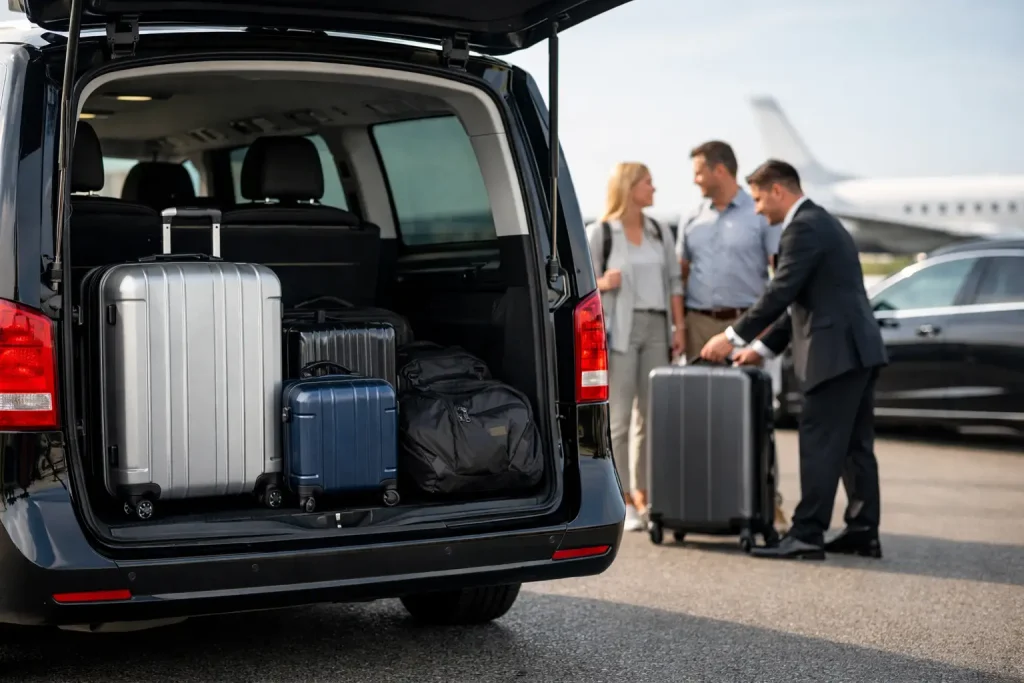
Families with young children usually benefit from fewer transfers and more space. Elderly passengers often find door-to-door pickup much easier than standing in lines or changing vehicles. Business travelers value reliability, privacy, and the ability to travel without losing time to route coordination. Small groups often discover that a larger vehicle gives them better overall value than splitting into separate rides.
This is also where vehicle type matters. A standard car may be enough for one or two passengers, but an MPV is often the better fit for groups, extra luggage, strollers, or shopping bags. Choosing the right vehicle in advance is part of making the trip simpler.
How to make the right decision
If your priority is the lowest fare, choose public transport and plan extra time. If your priority is speed to a major city with minimal concern about airport procedures, compare flights carefully against your true door-to-door timing. If your priority is comfort, direct pickup, luggage convenience, and a more controlled border journey, private transport is usually the stronger option.
The best choice is the one that fits the whole trip, not just the first leg. Travelers often underestimate how tiring a fragmented route can be, especially across the Singapore-Malaysia border. Paying more for a direct arrangement can be the more practical decision when the trip includes children, older passengers, work commitments, or fixed schedules.
For travelers who want the simplest route from pickup to destination, services like SGMYTRIPS are designed around that exact need. The value is not only in the vehicle. It is in removing extra steps from a journey that already has enough variables.
Before you book, think beyond the ticket price and ask a better question: how much convenience do you need this trip to give you?