A family trip can go off track before you even leave home. One missing passport, one tired toddler, or one badly timed bathroom stop can turn a simple journey into a long day. That is why knowing how to travel with kids is usually less about keeping them entertained and more about reducing friction at every stage of the trip.
For families traveling between Singapore and Malaysia, that matters even more. Border crossings, luggage, car seats, meal timing, and nap schedules all add pressure. The easiest trips are usually the ones with the fewest moving parts. When children are involved, convenience is not a luxury. It is often the difference between a manageable trip and a stressful one.
How to travel with kids starts with simpler planning
Parents often overfocus on what to pack and underfocus on how the trip is structured. In practice, the structure matters more. A direct route with fewer transfers is usually better than a cheaper option that involves multiple stops, queues, and waiting time.
Kids handle travel better when the day feels predictable. That means choosing departure times that fit their normal rhythm, allowing extra time for delays, and avoiding tight connections. If your child usually naps after lunch, a long transfer at that hour is likely to create problems. If your child gets hungry every few hours, you need food available before they ask, not after.
This is also where private transport can make sense for families. A door-to-door trip removes several common pain points at once. You do not need to unload bags at one stop, move everyone to another vehicle, and manage children in public waiting areas while watching the clock. For parents crossing between Singapore and Malaysia, reducing those transition points can make the trip significantly easier.
Choose timing based on your child, not just the route
Adults often book around price or availability. With kids, energy levels matter more. Some children travel best early in the morning when they are fresh. Others do better after breakfast and some playtime. Evening travel can work for children who sleep well in vehicles, but it can backfire if they are overtired and sensitive to disruption.
There is no universal best time. It depends on your child’s age, temperament, and routine. The key is to avoid planning that forces them to behave at their worst time of day.
Build in buffer time
Travel with children almost always takes longer than expected. Shoes come off. Someone needs the bathroom right before departure. A snack spills. A child decides they do not want to get into the car seat. If your schedule has no margin, small problems quickly feel bigger.
Give yourself more time than you think you need. The goal is not to move faster. It is to avoid the stress that adults transmit to children when every minute starts to matter.
Pack for access, not volume
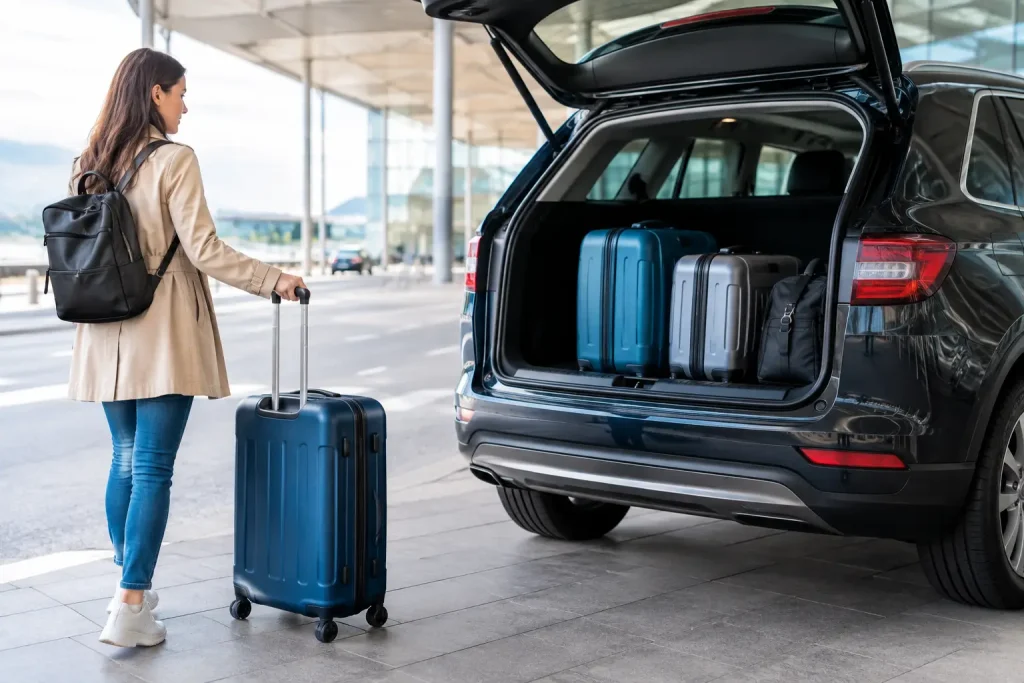
A common packing mistake is putting everything into one large suitcase and assuming that is enough. It is not enough if the wipes, snacks, extra clothes, and medication are all buried underneath heavier items.
When thinking about how to travel with kids, pack in layers. Keep the main luggage separate from the items you may need during the ride. One smaller bag should stay within easy reach and hold the practical essentials: water, wipes, tissues, one change of clothes, diapers if needed, basic medication, and a few familiar snacks.
Entertainment matters, but it should be simple. A tablet may help on longer rides, but it is not your only option. Small books, reusable stickers, drawing pads, or one or two favorite toys are often enough. Bringing too many items can create a different problem because kids start dropping them, swapping them, or asking for help every few minutes.
Snacks deserve special attention. Choose food that is easy to handle and not too messy. Familiar food is usually better than novelty travel treats. A hungry child is difficult. A hungry child with sticky hands and a sugar crash is harder.
Keep the journey physically comfortable
Children are more sensitive to discomfort than adults, but they usually cannot explain it clearly. They may just become fussy, loud, or restless. Parents then assume the issue is boredom when the real problem is heat, hunger, tight clothing, or a poor seating setup.
Dress kids in soft, comfortable layers. Temperatures can change between pickup points, indoor stops, and air-conditioned vehicles. Bring one light layer even if the weather looks warm. If your child uses a car seat, make sure it fits the journey you are taking and that installation is sorted out in advance rather than at departure.
Seat placement can matter too. Some children do better where they can see a parent easily. Others stay calmer when they can look out the window. If you are traveling with more than one child, think about who sits well together and who needs more space.
Expect different needs by age
Infants need frequent care and less schedule compression. Toddlers need movement, snacks, and patience. School-age children usually handle longer rides better, but they still need structure and clear expectations. Teenagers may be easier physically, but they often carry more devices, chargers, and personal preferences.
This is why family travel advice is never one-size-fits-all. What works for a seven-year-old may be useless for a two-year-old.
Make border crossings easier on yourself
Cross-border family trips add another layer of coordination. Documents, entry requirements, and timing all matter. The safest approach is to prepare everything the day before, not the morning of departure.
Check passports early. Keep travel documents together in one easy-to-reach folder or pouch. If you are traveling with children who have different citizenship or residency status from the adults, review requirements carefully before the trip. Do not assume the process will be identical for everyone in the vehicle.
Parents should also prepare children for what is happening. You do not need a long explanation. A simple one works better: we will stop, wait a bit, and then continue. Kids are usually more cooperative when they know the plan.
If you are booking transport for a border crossing, clarity helps. Confirm passenger count, luggage count, pickup location, and any child seat requirements in advance. A reliable private transfer provider such as SGMYTRIPS can reduce uncertainty here because the route, vehicle type, and pickup arrangement are already set before the day begins.
Manage expectations during the ride
Many parents hope for a perfect trip where children sit quietly for hours. That expectation causes its own stress. A better goal is a manageable ride with fewer disruptions and faster recovery when something does go wrong.
Tell children what the trip will feel like in simple terms. Let them know how long they may be in the car, whether there will be stops, and what happens when they arrive. Predictability helps. Surprises rarely help tired children.
It also helps to rotate attention. Snacks first, then quiet play, then a show, then rest. You do not need constant entertainment. You need enough variety to keep the trip moving without every minute becoming a negotiation.
For parents, emotional tone matters. If adults sound tense, children usually react to that before they react to the trip itself. Staying calm does not mean the trip is easy. It means you are preventing your own stress from becoming part of the problem.
What to prioritize when booking family transport
If you are comparing travel options, focus on the factors that matter most with kids: directness, luggage space, flexibility, and how many transitions are required. The cheapest route is not always the easiest once you add strollers, child seats, bags, and tired children.
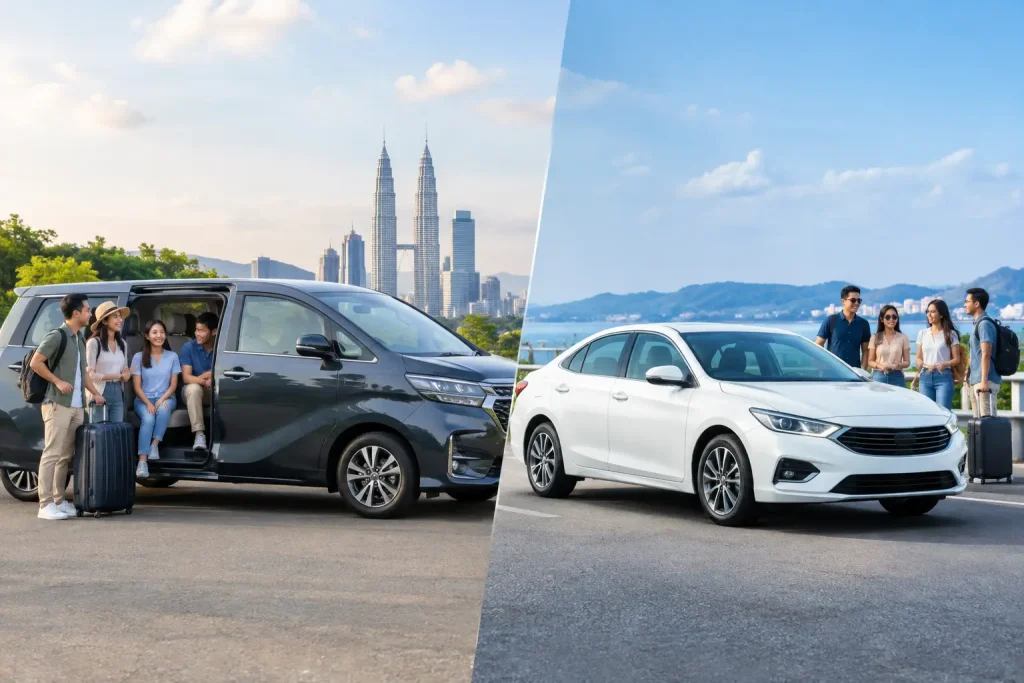
For short family trips, convenience often has more value than people expect. A private MPV or car can be especially useful when you want everyone to stay together, avoid queues, and travel on a schedule that matches your family rather than a fixed public timetable. That matters even more for airport pickups, weekend getaways, or trips to places like Johor Bahru, Malacca, Desaru, or Kuala Lumpur where door-to-door service saves time at both ends.
The trade-off, of course, is cost. Private transport usually costs more than mass transit. But for many families, the savings come in reduced hassle, better timing control, and a trip that does not start with carrying children and bags through multiple transfer points.
The best family trips leave room for reality
If you want to know how to travel with kids more smoothly, the answer is rarely a single hack. It is better timing, fewer steps, easier access to essentials, and transport that fits your family’s real needs instead of an ideal plan on paper.
Children do not need a perfect trip. They need adults who have made the day easier to manage. When the route is simpler, the schedule is realistic, and the ride is comfortable, family travel becomes much more practical and a lot less tiring for everyone.