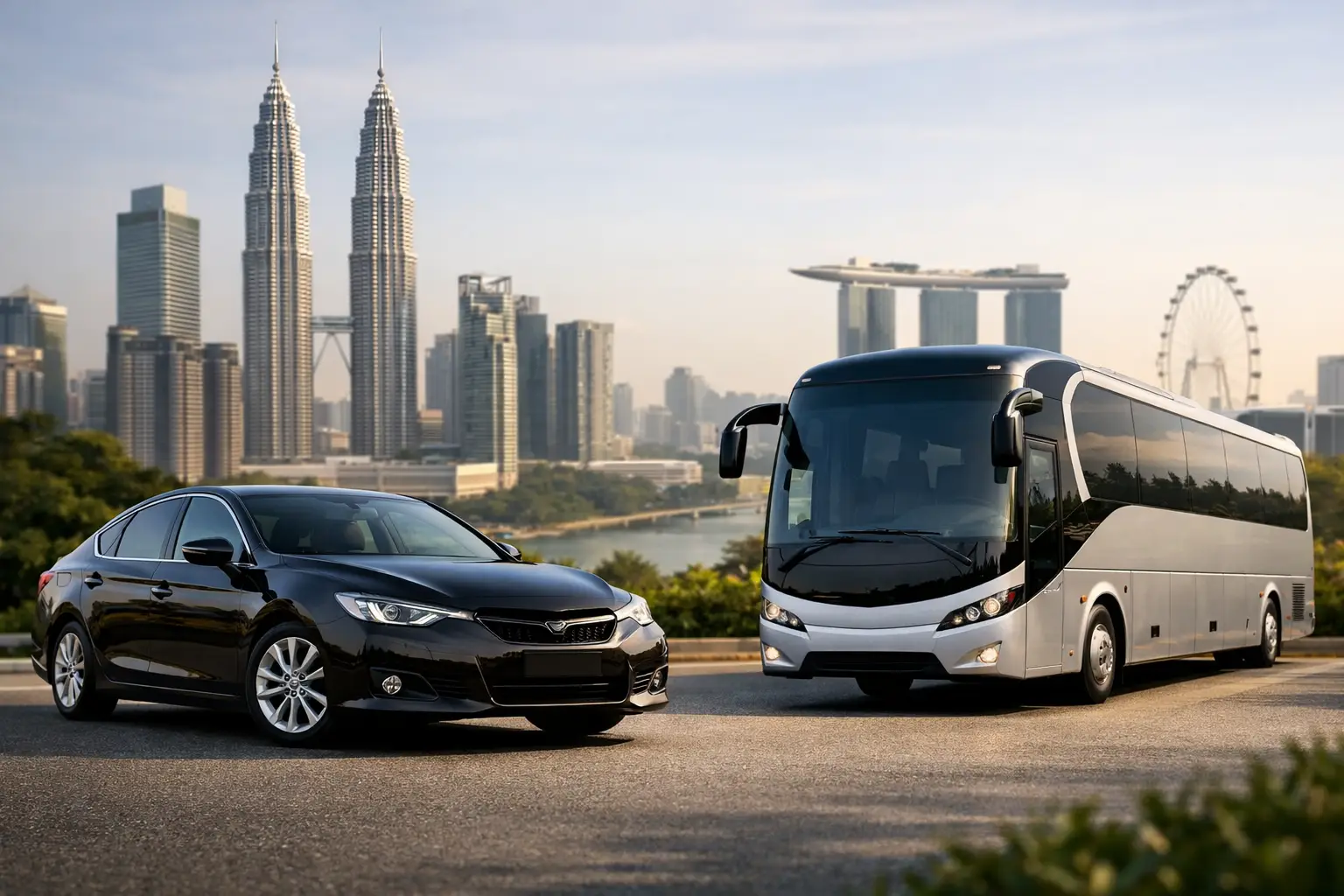
Friday evening at Woodlands can turn a simple trip into a long wait. If you are deciding between private car vs bus Singapore Malaysia travel, the real question is not just price. It is how much time, comfort, and control you want from the journey.
For some travelers, the bus is the right fit. It is usually the cheaper option and works well if you are traveling light, have a flexible schedule, and do not mind moving on a fixed route. For others, a private car makes more sense because it removes transfers, reduces waiting, and gets you from pickup point to destination with less friction.
The better option depends on who is traveling, where you are going, and how much hassle you are willing to accept. A family heading to Legoland is making a different decision from a solo traveler going to Johor Bahru for a quick day trip. A business traveler going to Kuala Lumpur also has different priorities from a group going to Malacca for the weekend.
Private car vs bus Singapore Malaysia: what really changes
The biggest difference is not the vehicle itself. It is the travel experience around the vehicle.
With a bus, you are working around the operator’s timing, boarding point, drop-off point, and passenger volume. You may need to arrive early, queue, load your own luggage, get off for immigration, reboard, and then arrange your onward ride after arrival. On paper, the route is simple. In practice, it often becomes a chain of small delays.
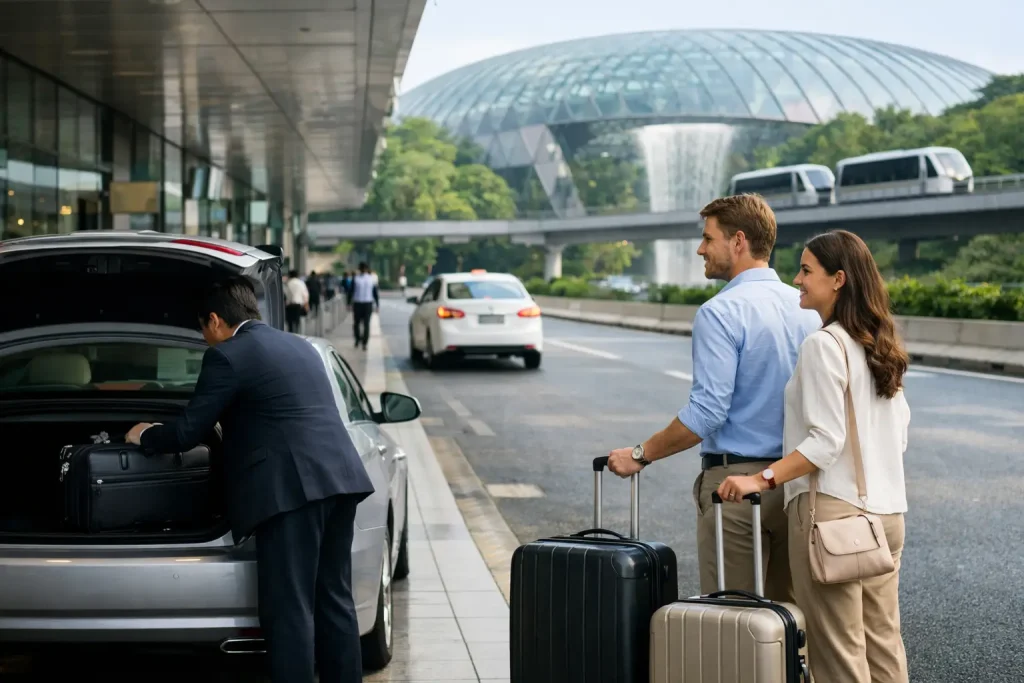
With a private car, the trip is arranged around your schedule and destination. You are picked up at your chosen location and dropped off where you actually need to be, whether that is a hotel, office, home, airport, or resort. That makes a major difference on cross-border trips, especially when every transfer adds time and uncertainty.
This is why a direct comparison should go beyond ticket price. The bus may cost less upfront, but a private car can save hours, reduce stress, and lower the risk of missed appointments or disrupted plans.
Cost: cheaper fare vs better overall value
If you compare only the base fare, the bus usually wins. It is built for shared travel, so the per-person cost is lower. For solo travelers on a tight budget, that matters.
But cost changes once you look at the full trip. If the bus only gets you to a terminal in Johor Bahru or Kuala Lumpur, you may still need a taxi, e-hailing ride, or local transfer to reach your final stop. If you are carrying luggage, traveling with children, or arriving late, those extra legs are not just inconvenient. They add direct cost and indirect hassle.
Private car service often becomes more competitive when two or more passengers travel together. Split across a family or small group, the price difference narrows. In some cases, it becomes a clear value choice because one vehicle covers the full route door to door.
For business travelers, cost should also include the value of time. Saving one to two hours on a border crossing or avoiding a missed meeting can be worth far more than the fare difference.
Time and border efficiency
Travel time between Singapore and Malaysia is never fixed. Traffic, holiday surges, school breaks, and checkpoint congestion all affect the route.
Buses are more exposed to delays because they run on fixed departure schedules and move in a shared-passenger format. Even when the drive itself is not long, the full process can stretch out. Waiting to board, waiting for the bus to fill, waiting at immigration, and waiting for other passengers to return all add up.
A private car is not immune to border traffic, but it removes many of the delays around the trip. There is no terminal check-in, no standing in boarding lines, and no final transfer after arrival. You leave when scheduled, travel directly, and continue to your destination after clearance.
That matters most on routes beyond Johor Bahru. If you are heading to Desaru, Malacca, Kuala Lumpur, Genting Highlands, or even onward to ports and resort areas, every unnecessary stop costs you more than it would on a shorter trip.
When time matters most
Private car tends to be the stronger choice if you have a flight connection, a hotel check-in window, a meeting, young children with limited patience, or elderly passengers who should not be moving between multiple transport points. In those cases, reliability is not a luxury. It is part of the travel requirement.
Comfort and privacy on the road
Comfort is where the gap becomes obvious.
On a bus, your space is limited to your seat. Luggage rules are fixed. Noise levels depend on the group. Rest stops, if any, follow the operator’s plan. If the trip is crowded or delayed, there is not much you can change.
A private car gives you a controlled environment. You travel with your own party, keep your luggage with the trip, and avoid sitting next to strangers. For couples, families, and small groups, this creates a quieter and more predictable ride. It is also much easier to handle snacks, child seats, elderly passengers, or work calls on the way.
Privacy matters more than many travelers expect. On a short route, it may seem minor. On a longer cross-border trip to Kuala Lumpur, Malacca, or Penang, it becomes a practical advantage.
Flexibility for real travel plans
Most trips are not as simple as point A to point B. You may need airport pickup, hotel drop-off, a stop for food, extra luggage space, or a departure time outside the busiest public schedules.
That is where bus travel feels rigid. It is designed for standardized movement, not personal travel needs. If your plans shift, your options may narrow quickly.
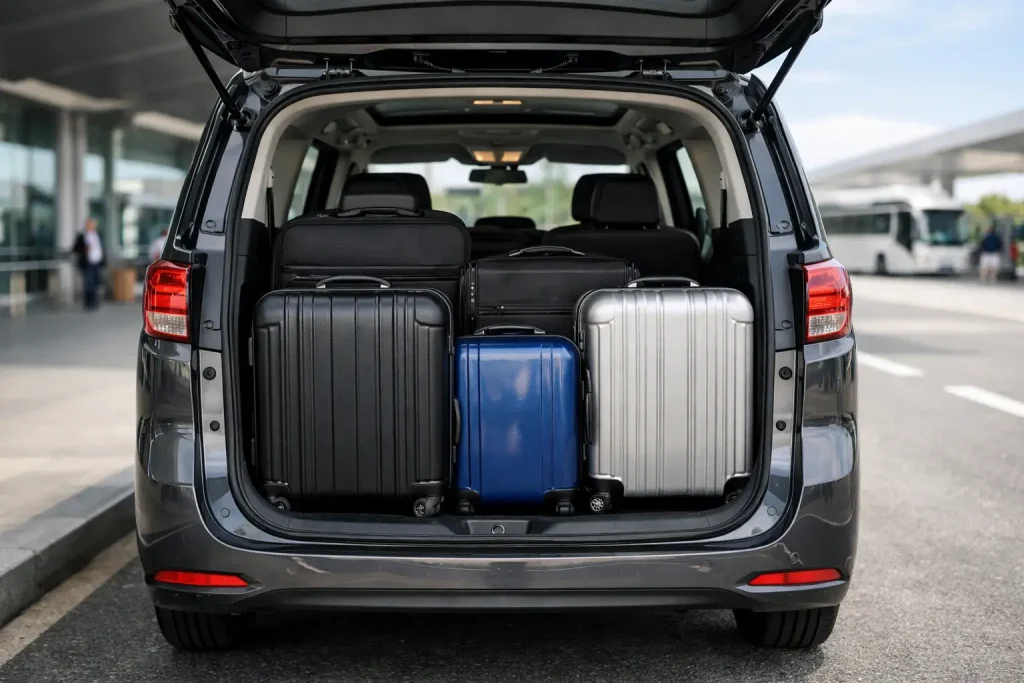
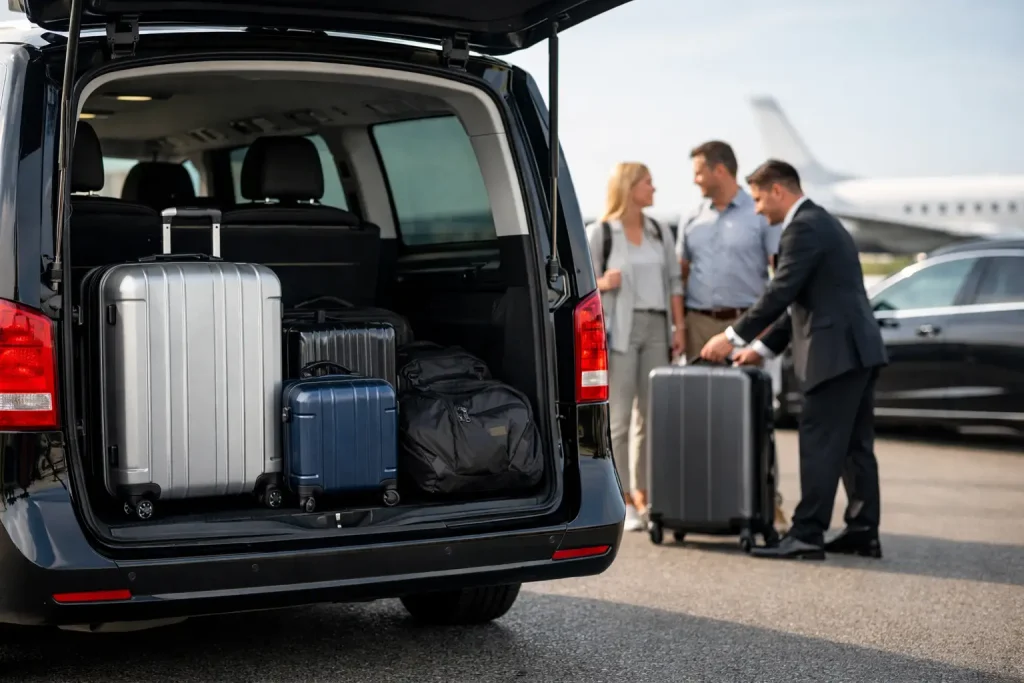
Private transport is better suited to travelers with specific logistics. A pre-booked MPV or private car works well for families with strollers, groups with shopping bags, or travelers carrying presentation materials, golf bags, or vacation luggage. It also suits passengers going to destinations that are less convenient by public bus.
For example, getting from Singapore to central Johor Bahru by bus is one thing. Getting directly to a resort in Desaru, a hotel in Malacca, or a ferry transfer point is another. The more specialized your destination, the more useful a private car becomes.
Who should choose the bus
The bus is still a practical option in the right situation. If you are traveling alone, packing light, staying close to a major arrival point, and keeping your budget low, it can do the job. It also makes sense if you are not in a rush and do not mind a more structured, shared travel setup.
For simple city-to-city movement with flexible timing, the savings may be worth the trade-off.
Who should choose a private car
Private car travel is usually the better fit for families, small groups, tourists with luggage, business travelers, and anyone who wants fewer moving parts. It is especially useful for door-to-door routes, airport transfers, day trips, and destinations outside the standard bus network.
It also makes sense when the group cost is shared. One car for several passengers can be more efficient than buying separate tickets, arranging extra taxis, and managing multiple transfers.
For cross-border travelers who care about predictability, a pre-arranged service removes a lot of common problems before the trip even starts. That is why many travelers choose providers such as SGMYTRIPS when they want direct transport between Singapore and destinations across Malaysia without the usual stop-and-start process.
Private car vs bus Singapore Malaysia: the practical decision
If your priority is the lowest fare, the bus is usually the answer. If your priority is convenience, time savings, comfort, and direct access to your final destination, private car service is usually the stronger option.
Neither choice is universally better. It depends on your route, passenger count, luggage, schedule, and tolerance for delays. But for many cross-border trips, especially those involving children, elderly family members, airport timing, or non-central destinations, private transport solves problems that the bus simply does not address.
Before you book, think about the whole journey, not just the ticket. The easier trip is often the one that leaves you with the least to manage once you are already on the move.