Table of Contents
Kukup is a Chinese fishing village in Johor’s Pontian district where you eat seafood in big open-air restaurants built on stilts over the water. The usual order is chilli crab, steamed fish, prawns, lala clams and sambal dishes, shared at round tables with a view of fish farms and the mangrove island across the channel. Go for an early lunch on a weekday, ask the price per kilo before anything is cooked, and allow about 1 hour 30 minutes to 2 hours each way from Singapore. Here is how to make the most of a Kukup seafood meal.
Are Kukup’s restaurants really floating?
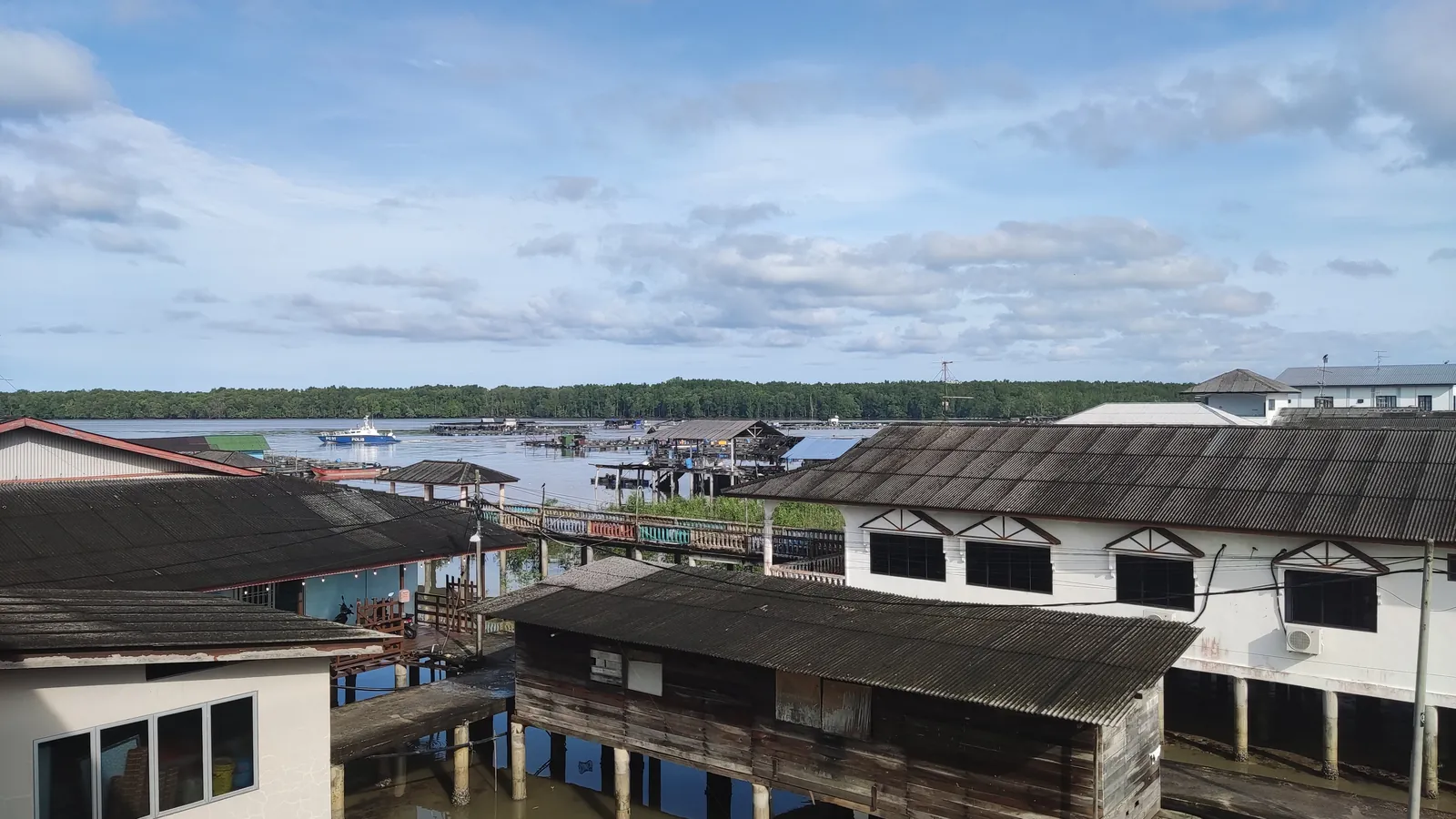
Not quite. People often call them “floating restaurants”, but the village of Kukup Laut stands on wooden and concrete stilts above the tidal shoreline of the Straits of Malacca. Houses, temples, shops and restaurants are linked by plank walkways, and at high tide the water runs right underneath the dining halls. At low tide the mudflats appear, busy with crabs and mudskippers. Either way, you are eating over the sea, and that is a big part of the appeal.
What does float are the kelong fish farms in the channel between the village and Pulau Kukup. Many of the fish and shellfish served in the restaurants are reared in these cages, which is why the village has such a reputation for freshness.
What to order at a Kukup seafood restaurant
Menus are long, but most tables end up with a mix of these:
- Chilli crab or black pepper crab – the centrepiece for most groups. Order deep-fried mantou buns to mop up the sauce.
- Steamed fish – often seabass, grouper or pomfret, steamed Teochew style, with ginger and soy, or with lime and chilli.
- Prawns – butter prawns, salted-egg prawns, or simply steamed so you taste the freshness.
- Lala (clams) – stir-fried with ginger and chilli or cooked in a light broth.
- Sambal stingray or sotong – a spicy dish to balance the milder ones.
- Oyster omelette – a crowd-pleaser for children.
- Vegetables – sambal kangkung or garlic greens, plus fried rice or noodles to fill everyone up.
Not sure what to pick? Ask the staff what came in that morning. The catch changes daily, and the freshest fish is usually the best choice.
A sample order for a family of six
If you want a starting point, this mix covers most tastes without over-ordering: one large crab in chilli or black pepper sauce with a plate of fried mantou, one steamed fish of about 600–800 g, a plate of butter or salted-egg prawns, a plate of lala, one sambal dish, a vegetable and a large fried rice. Add a second crab only if your group is serious about crab. Children usually enjoy the oyster omelette, fried rice and prawns, and the steamed fish is a safe choice for grandparents who prefer milder food. If anyone in your group is allergic to shellfish, tell the staff when you order, as the same woks are used for many dishes.
How ordering and pricing work
Like most Malaysian seafood restaurants, Kukup’s restaurants price crab, live fish, prawns and lobster by weight, often shown on the menu as “seasonal price” rather than a fixed figure. That is normal, but it is the main source of surprises on the bill. A few habits help:
- Ask the price per kilo (or per 100 g) for each item before you order.
- Agree on the size – say roughly how heavy a fish or crab you want, or ask the staff to show you the weighed catch before it goes to the kitchen.
- Order in rounds. Start with four or five dishes for a family of six and add more if needed; portions are generous.
- Check extras such as rice, drinks, towels and peanuts when the bill comes.
- Bring ringgit cash. Some restaurants take cards or QR payments, but cash is the safest option in a small village.
Choosing a restaurant
The largest and busiest restaurants are clustered near the international ferry terminal, where ferries leave for Tanjung Balai Karimun in Indonesia. They have big dining halls over the water, long menus and space for large family groups. Smaller restaurants further along the walkways are quieter and simpler.
Rather than chasing one “best” restaurant, look for a busy dining hall with lively seafood tanks, ask to sit by the railings for the view, and check that the staff are happy to quote prices clearly. Weekend crowds are a good sign of freshness but mean longer waits for food.
Best time to go
- Arrive by about 11.30am for a waterfront table before the lunch rush, especially on weekends and public holidays.
- Weekdays are noticeably calmer, with quicker service.
- Check the tide if you care about the view: high tide puts water under your table; low tide reveals the mudflats and the wildlife.
- Afternoon showers are common in the wetter months at the end of the year. The dining halls are covered, so rain is no reason to cancel.
Before or after the meal
Most visitors combine lunch with a short walk along the village boardwalks, past drying racks, small temples and moored fishing boats. Shops near the ferry terminal sell dried seafood such as keropok (fish and prawn crackers), salted fish and belacan (shrimp paste), which make good gifts.
Boats from the jetty run short trips out to the kelong fish farms, and across the channel lies Pulau Kukup, a protected mangrove island with a boardwalk. If you want more than lunch, our Kukup destination page covers the mangroves, the kelongs and nearby Tanjung Piai in more detail.
Taking seafood home to Singapore
Many families leave Kukup with a cooler bag of dried or frozen seafood. Singapore limits how much food travellers can bring in for their own use. At time of writing, the Singapore Food Agency (SFA) allows up to 5 kg of fish and seafood per traveller, with tighter limits on some items and a ban on certain chilled seafood. Check the SFA list before you buy, and read our guide to Singapore customs allowances for the GST rules on everything else you bring back.
Getting to Kukup for lunch
Kukup is about 60 km from the Tuas Second Link, which is usually the quicker crossing for this side of Johor. There is no direct public transport from Singapore, and the village centre has very little parking, so drivers normally leave their cars in paid lots on the edge of the village. If you are deciding between crossings, our comparison of Woodlands vs Tuas explains when Tuas makes more sense.
A seafood lunch is also the kind of outing where nobody wants to be the designated driver. With a Luxway SGMY private car, the group is picked up at home, stays seated through immigration at both checkpoints and is dropped close to the restaurants. Fares start from SGD 170 one way for a Toyota Innova, per car, with tolls, checkpoint fees, fuel and parking included, and the price is the same in both directions. No deposit; you pay the driver on arrival. For a lunch-and-back day, the Day Trip Service keeps the same car and driver with you by the hour.
Book your Kukup seafood trip
Let us know your pick-up address, date, number of passengers (including seniors and children) and whether you want to add the mangroves or Tanjung Piai. Read how booking works, check fares on the Singapore to Kukup page, or Whatsapp us and we will confirm the vehicle and fare in writing.
Frequently Asked Questions
Do I need to book a table at a Kukup seafood restaurant?
Most visitors simply walk in. On weekends and public holidays, larger groups may want to call the restaurant a day ahead, or arrive before noon to get a table by the water.
Is Kukup seafood halal?
Kukup Laut is a mainly Chinese fishing village and many of its restaurants are not halal-certified, so Muslim travellers should check with the restaurant or look for a halal certificate before ordering.
How long should we plan for lunch in Kukup?
Allow about one and a half to two hours for the meal on a busy day, plus time for a walk around the village. Most groups leave Singapore mid-morning and are home by evening.
Is Kukup suitable for elderly parents?
Yes, as long as they can manage the walkways, which can be uneven. Restaurants near the ferry terminal are the easiest to reach, and travelling by private car saves walking at the checkpoints.
Can we bring leftover seafood back to Singapore?
Small amounts for your own use are usually fine within the Singapore Food Agency limits, but some chilled seafood is not allowed. Check the SFA website before you pack it.
Last updated: 14 October 2026

Luxway SGMY
Planning a trip to JB, Melaka, or Genting? At Luxway, we believe in transparency and comfort. Our blog features updated 2026 guides on private car transfers, border-crossing tips, and hidden gems in Malaysia. Read our curated content to travel like a VIP with no hidden fees.