Table of Contents
- What makes George Town’s street art special
- Penang street art walking route, stop by stop
- Steel-rod caricatures to look out for
- More street art beyond the main route
- Practical tips for the walk
- Where to stay for the street art
- Getting to Penang from Singapore
- Plan your Penang trip
- Frequently Asked Questions
Penang’s best-known street art sits inside a compact corner of George Town, and you can see the famous murals on foot in about two to three hours. The route below links the eight murals painted by Ernest Zacharevic in 2012, starting on Penang Road and finishing on Chew Jetty, a walk of a little over 2 km. Along the way you’ll pass Khoo Kongsi, the Street of Harmony and dozens of witty steel-rod caricatures fixed to shophouse walls. Go early in the morning, wear comfortable shoes and treat the route as a guide rather than a checklist, because a few pieces have faded over the years.
What makes George Town’s street art special
George Town was listed as a UNESCO World Heritage Site in 2008, together with Melaka, and its street art grew out of that heritage. The two projects most visitors come for are quite different:
- Ernest Zacharevic’s murals (2012). The Lithuanian artist painted a series of murals for the George Town Festival in 2012. Several mix paint with real objects, such as an actual bicycle or motorbike fixed to the wall, which is why people queue to pose with them. None of the murals has an official title; the names used below are the ones that stuck.
- “Marking George Town” steel-rod caricatures. Commissioned by the state government after a 2009 ideas competition and made by the company Sculpture at Work, these 52 cartoon-style sculptures in bent steel rod explain the history and character of each street, often with a joke. They are easy to miss, so look up at walls and corners as you walk.
Weather is hard on outdoor art. Some of the 2012 murals have been restored by the artist more than once; in late 2024 he returned at the state government’s invitation to touch up the best-known pieces on Armenian Street, Ah Quee Street and Cannon Street. Others are now faint, and at least one early mural has disappeared. Later projects, such as the 2013 “101 Lost Kittens” cat murals, were painted to be temporary, so don’t be surprised if a piece you saw online is no longer there.
Penang street art walking route, stop by stop
This order follows the streets in a logical line from west to east, ending by the sea. Distances between stops are short, mostly a few hundred metres.
| Stop | Mural or sight | Street |
|---|---|---|
| 1 | Awaiting Trishaw Paddler | Penang Road (Jalan Penang) |
| 2 | Little Girl in Blue | Muntri Street (Lebuh Muntri) |
| 3 | Reaching Up (also called Boy on a Chair) | Cannon Street (Lebuh Cannon) |
| 4 | Khoo Kongsi clan house (optional visit) | Cannon Square, off Cannon Street |
| 5 | This Old Man | Armenian Street, opposite the Cannon Street junction |
| 6 | Little Boy with Pet Dinosaur | Ah Quee Street (Lebuh Ah Quee) |
| 7 | Boy on a Bike | Ah Quee Street, a few steps further on |
| 8 | Little Children on a Bicycle | Armenian Street, near Beach Street |
| 9 | Children in a Boat | Chew Jetty, off Weld Quay |
Stops 1–2: Penang Road and Muntri Street
Begin at the Awaiting Trishaw Paddler on Penang Road, which shows a trishaw rider resting while he waits for passengers. Turn into Muntri Street and walk east, crossing Leith Street, to find Little Girl in Blue. Muntri Street is lined with restored shophouses and small guesthouses, and it’s a pleasant, quieter street to warm up on. From here, continue to Love Lane, then turn towards Chulia Street, the backpacker strip that comes alive with hawker stalls in the evening.
Stops 3–5: Cannon Street, Khoo Kongsi and Armenian Street
Follow Chulia Street to Pitt Street (Jalan Masjid Kapitan Keling) and head south. This stretch is often called the Street of Harmony, because a Chinese temple, a Hindu temple, a mosque and a church all stand within a short walk of each other. Keep going past Armenian Street into Cannon Street for Reaching Up, a boy standing on a chair and stretching towards a window.
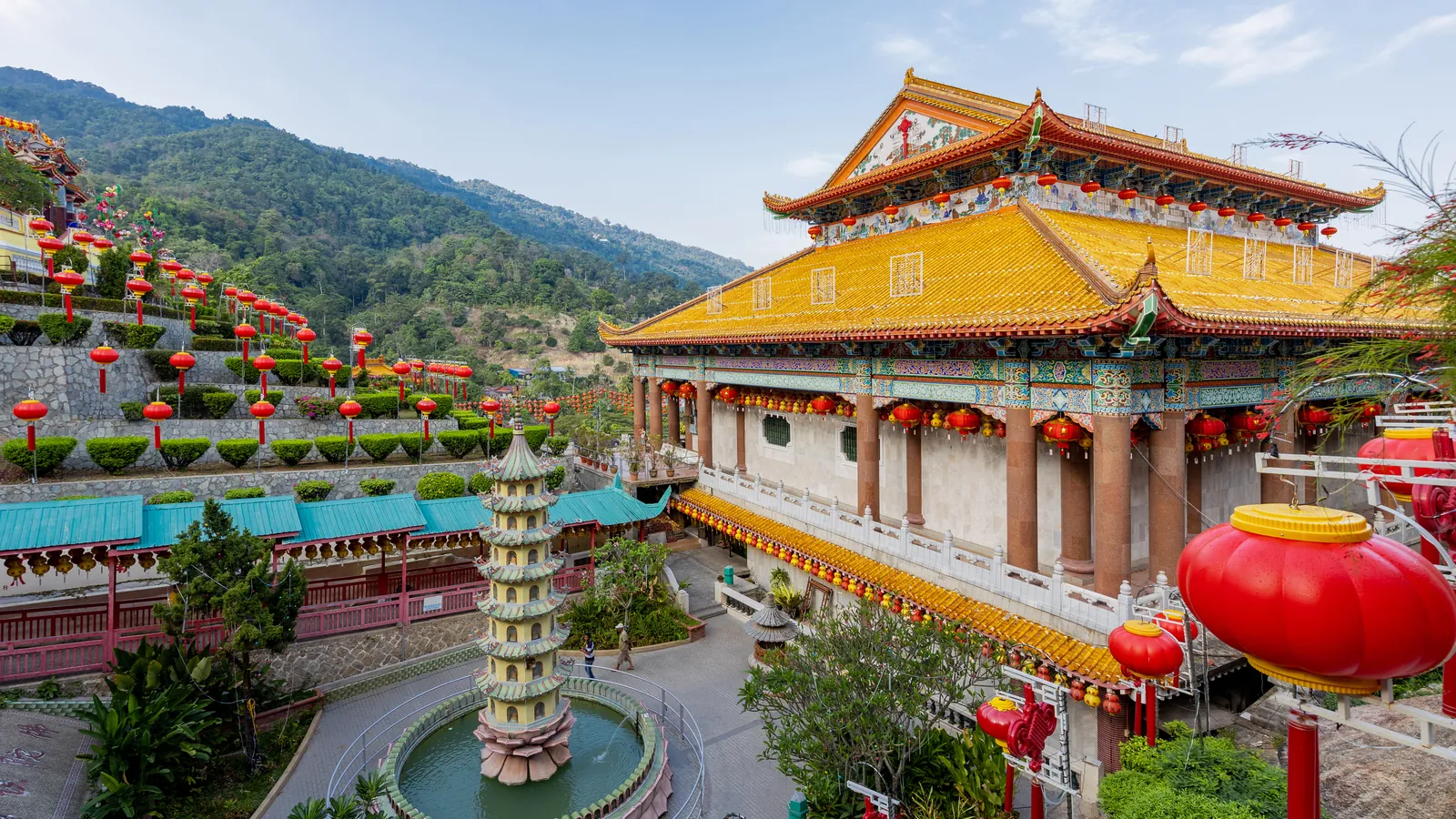
A short detour leads to Khoo Kongsi, one of the most elaborate Chinese clan houses in Malaysia, set in its own square behind the shophouses. It has an entrance fee and its own opening hours, so check before you go if you want to step inside. Back on Armenian Street, This Old Man faces the Cannon Street junction.
Stops 6–8: Ah Quee Street and the bicycle mural
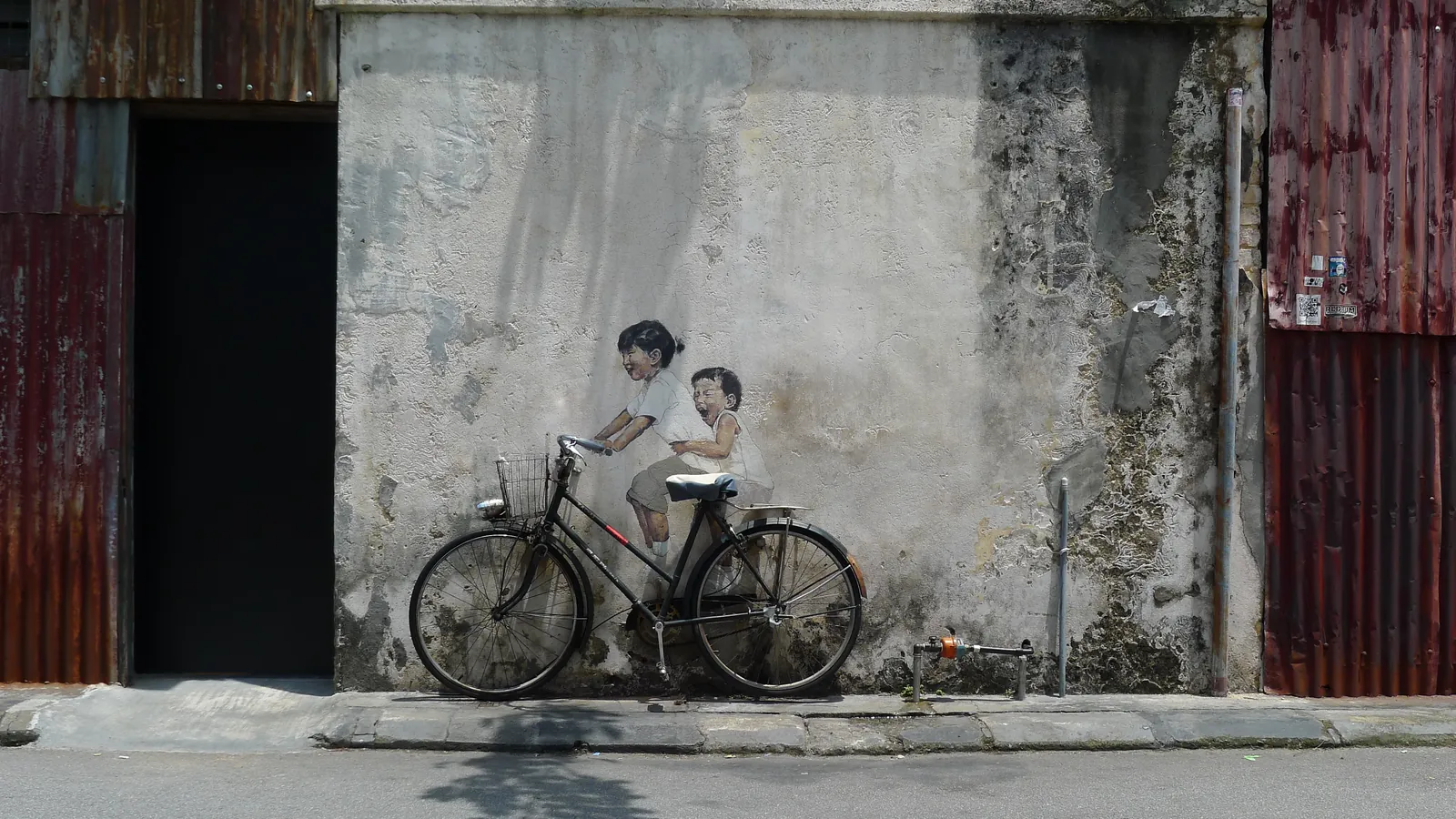
Walk east along Armenian Street, turn left into Soo Hong Lane and right into Ah Quee Street. Here you’ll find Little Boy with Pet Dinosaur and, just beyond it, Boy on a Bike, where a painted boy sits on a real motorbike. Continue to Beach Street, turn right and walk to the end of Armenian Street for the most photographed mural in Penang, Little Children on a Bicycle: a girl pedalling with her younger brother clinging on behind, using a real bicycle fixed to the wall. Expect a queue on weekends and holidays.
Stop 9: Chew Jetty
Cross Beach Street and walk down Armenian Street Ghaut to Weld Quay. On the other side are the clan jetties, wooden villages on stilts built by Chinese clans who worked the waterfront. Children in a Boat is on Chew Jetty, the largest and busiest of them. People still live here, so keep your voice down, don’t step into homes and be respectful with your camera.
Steel-rod caricatures to look out for
You’ll pass many of the 52 caricatures on this route without trying. Each one tells a small story about the spot where it hangs: a trade once practised on the street, a local legend or a famous resident. They are drawn in a simple cartoon style and usually include a short caption, which makes them fun for children to hunt for. Pick up a printed street-art map from your hotel or a tourist information counter if you want to track them down one by one.
More street art beyond the main route
- Hin Bus Depot – a former bus depot near Komtar that became an art space after hosting a Zacharevic exhibition in 2014. The walls are covered in murals and it runs exhibitions and a weekend market; check its official site for current events.
- Murals around Armenian Street Ghaut and Beach Street – smaller pieces by other artists appear and disappear here, so wander the side lanes.
- Interactive and 3D-style murals – many cafés and shops have added their own murals; these come and go with the businesses.
Practical tips for the walk
- Start early. Between about 8 am and 10 am the light is softer, the streets are cooler and the queues at the bicycle and motorbike murals are short.
- Allow two to three hours. The walk itself is short, but photos, temple visits and coffee stops add up.
- Dress for the heat and for temples. Light clothes, a hat and water for the walk; cover shoulders and knees if you plan to go into Khoo Kongsi, the mosque or other places of worship.
- Watch the traffic. Many George Town streets have narrow or broken five-foot ways, so you’ll sometimes walk on the road. Hold small children’s hands.
- Don’t touch or climb on the props. The bicycle and motorbike are fixed to old walls and are easily damaged.
- Combine it with lunch. End the walk with a meal: our Penang food guide lists the dishes to try and the streets where to find them.
- Rainy afternoons. Penang gets heavy afternoon showers in some months, so do the outdoor part first and keep museums or cafés for later.
Where to stay for the street art
If street art and food are the main reasons for your trip, base yourself inside or close to the George Town heritage zone so you can walk out early before the heat. Families who also want a pool and the sea often split their stay between town and the beach. Our guide on where to stay in Penang compares the areas in detail.
Getting to Penang from Singapore
Penang is around 700 km from Singapore, so most people choose between a flight, a long-distance coach or going by road. Our article on the best transport to Penang from Singapore compares the options.
Going by road makes sense when you’re a family or a group with luggage, older parents or small children, or when you’d like to stop on the way. With a private car from Singapore to Penang, the whole group travels in one car from your door, stays seated through immigration at both checkpoints and is dropped at your George Town hotel. Many families break the long drive with a night in Ipoh, which has its own old-town murals.
Luxway SGMY fares are per car and the same in both directions, with tolls, checkpoint fees, fuel and parking included. There’s no deposit: you pay the driver on arrival. Penang fares start from SGD 610 one way in a Toyota Innova; the Toyota Hiace or 18-seater van is SGD 810 one way.
Plan your Penang trip
Send us your travel date, pick-up address in Singapore, Penang hotel and the number of passengers and suitcases. Check fares on the Singapore to Penang page, read how booking works, or Whatsapp us for a written quote.
Frequently Asked Questions
How long does the Penang street art walk take?
The main route covering the 2012 Zacharevic murals is a little over 2 km. At an easy pace with photo stops it takes about two to three hours; add time if you go inside Khoo Kongsi or stop for food.
Which is the most famous mural in Penang?
Little Children on a Bicycle on Armenian Street, painted by Ernest Zacharevic for the 2012 George Town Festival. It uses a real bicycle fixed to the wall and almost always has a queue of people waiting for a photo.
Is the Penang street art free to see?
Yes. The murals and steel-rod caricatures are on public streets and free to view at any time. Places you may visit along the way, such as Khoo Kongsi, charge their own entrance fees.
Are all the original murals still there?
Not all of them. The best-known pieces have been restored by the artist, most recently in 2024, but some others have faded and at least one has been removed. Temporary projects such as the 2013 cat murals were designed to wash off over time.
Is the walk suitable for young children and strollers?
Children usually enjoy spotting the murals and caricatures, but pavements in the old town are uneven and sometimes missing, so a light, foldable stroller or a baby carrier is easier than a large pram. Go in the morning to avoid the midday heat.
Last updated: 14 October 2026

Luxway SGMY
Planning a trip to JB, Melaka, or Genting? At Luxway, we believe in transparency and comfort. Our blog features updated 2026 guides on private car transfers, border-crossing tips, and hidden gems in Malaysia. Read our curated content to travel like a VIP with no hidden fees.