Table of Contents
Short answer: in Singapore, the best-known places to buy ringgit are the cluster of money changers at The Arcade in Raffles Place, the many counters inside People's Park Complex in Chinatown, and the money changers at Mustafa Centre in Little India. In Johor Bahru, the busiest area is around JB Sentral and Jalan Wong Ah Fook, a short walk from the Causeway checkpoint. Wherever you go, the "best" money changer is simply the licensed one offering the best selling rate for ringgit on the day, so compare a few boards before you hand over your cash.
This guide covers where to change money on both sides of the border, how to read a rate board, how to check that a money changer is licensed, and when a card, ATM or QR payment is a better choice than cash. We don't quote exchange rates here because they change every day.
Where to change ringgit in Singapore
The Arcade, Raffles Place
The Arcade has long been Singapore's best-known money-changing spot. Many counters sit next to each other, so you can walk the row, compare the ringgit rate on each board and pick the best one in a few minutes. Competition keeps margins thin. Lunchtime on weekdays brings office crowds, so mid-morning or mid-afternoon is calmer.
People's Park Complex, Chinatown
People's Park Complex has a large number of money changers within a short walk of each other, which again makes comparing easy. It is a good option if you live in the west or the city fringe and don't want to go into the CBD.
Mustafa Centre, Little India
Mustafa Centre is known for its long opening hours, and its money changers are a handy choice when you need ringgit late in the evening before an early trip. Rates are generally competitive, though not always the very best for ringgit, so check the board.
Your neighbourhood mall
Many heartland malls and MRT-linked shopping centres have a money changer or two. For small amounts the convenience may be worth a slightly weaker rate. For larger sums, a trip to one of the clusters above usually pays off.
A word of warning: when the Singapore dollar is strong against the ringgit, demand jumps. Reports from 2022 and 2023 described queues at The Arcade and some counters running out of ringgit or stopping sales for a while. Before a festive weekend or school holiday, change your money a few days early.
Where to change money in Johor Bahru
Money changers in Malaysia often offer slightly better rates for Singapore dollars than counters in Singapore, so some travellers change only a small amount at home and the rest in JB. The obvious area is the city centre next to Bangunan Sultan Iskandar (BSI): JB Sentral station and the streets around Jalan Wong Ah Fook have several money changers within walking distance of the checkpoint. You will also usually find money changers in JB's larger shopping malls; our guide to JB shopping malls helps you pick one for the rest of your day.
The catch is timing. If you arrive with no ringgit at all, you need cash before you can pay for anything that only takes cash, and the first counter you see may not be the best. Carry a little ringgit from Singapore for the first few hours, then compare rates once you are settled.
How to read a rate board
Most boards show two numbers per currency. One is the rate at which the money changer buys a currency from you, the other the rate at which it sells it to you. The gap between them is the shop's margin. A few rules make comparing fair:
- Look at the right column. In Singapore you are buying ringgit, so you want the rate for selling MYR to you. In JB you are selling Singapore dollars, so look at the SGD column.
- Check the units. Some boards show how many ringgit you get for one Singapore dollar, others show the cost of 100 ringgit. Compare like with like.
- Compare against the mid-market rate. Your banking app or a currency site shows the mid-market rate. The closer the board is to it, the better the deal.
- Ask about large amounts. Some counters give a better rate for bigger sums, and some only have enough stock for smaller ones.
- Count the cash at the counter. Check the notes and keep the receipt before you walk away.
Use only licensed money changers
Both countries license money changers, and it is worth a quick check before you change a large amount.
- Singapore: money-changing is licensed by the Monetary Authority of Singapore (MAS) under the Payment Services Act. You can search a business on MAS's Financial Institutions Directory.
- Malaysia: money-changing is licensed by Bank Negara Malaysia (BNM) under the Money Services Business Act 2011. BNM publishes the list of licensed operators on its website, and licensed counters typically display the logo of the Malaysian Association of Money Services Business. BNM warns that dealing with unlicensed operators is at your own risk.
Avoid anyone offering to change money informally in a car park, at a petrol station or through social media. A rate that looks too good is the usual bait.
Cash, card, ATM or QR?
You may need less cash than you think. Here is how the options compare for a typical JB trip.
| Option | Good for | Watch out for |
|---|---|---|
| Cash from a money changer | Hawker stalls, night markets, small shops, parking machines | Rates vary by counter; carrying large sums |
| Credit or debit card | Malls, restaurants, hotels, larger purchases | Your bank's foreign transaction fee; always choose to pay in ringgit, not Singapore dollars |
| ATM withdrawal in Malaysia | Topping up cash during a longer trip | Fees from both your bank and the ATM owner; check before you travel |
| QR payment with your Singapore bank app | Shops that display DuitNow QR | Only works with participating banks; not every stall accepts it |
On the QR option: since 31 March 2023, Singapore and Malaysia have linked their QR payment systems, so customers of participating Singapore banks can scan Malaysian DuitNow QR codes with their usual app. At launch, the participants included DBS, OCBC and UOB. The amount is converted at your bank's rate, so compare it with what a money changer offers.
When a card terminal or shop asks whether you want to pay in Singapore dollars, say no and pay in ringgit. Converting at the till usually costs more than letting your own bank do it.
How much cash to carry
For a day trip to JB, enough ringgit for food, drinks, small shopping and a buffer is usually plenty, with a card for anything bigger. Families and groups may want more if they plan to eat at hawker centres or visit a pasar malam, where cash still rules. Keep notes in two places, not all in one wallet.
If you are moving a large amount, know the rules. Singapore requires a Cash Movement Report for physical cash and bearer negotiable instruments above S$20,000 (or the foreign-currency equivalent) carried into or out of Singapore, which you can file through ICA's website or the MyICA app. Malaysia also has declaration rules for large sums, so check the Royal Malaysian Customs Department before carrying significant cash. For what you can bring back into Singapore, see our Singapore customs allowance guide.
Practical tips
- Change a little at home, the rest in JB if you want the best rate and know where you'll stop.
- Avoid changing at the last minute on the eve of a long weekend, when ringgit can run short.
- Carry smaller notes for stalls and parking; big notes can be hard to break at a hawker centre.
- Set up your bank app before you go so you can pay by QR and check the mid-market rate on the spot.
- Get mobile data sorted so payments and maps work across the border; our Malaysia eSIM and SIM card guide compares the options.
Fitting the money stop into your day
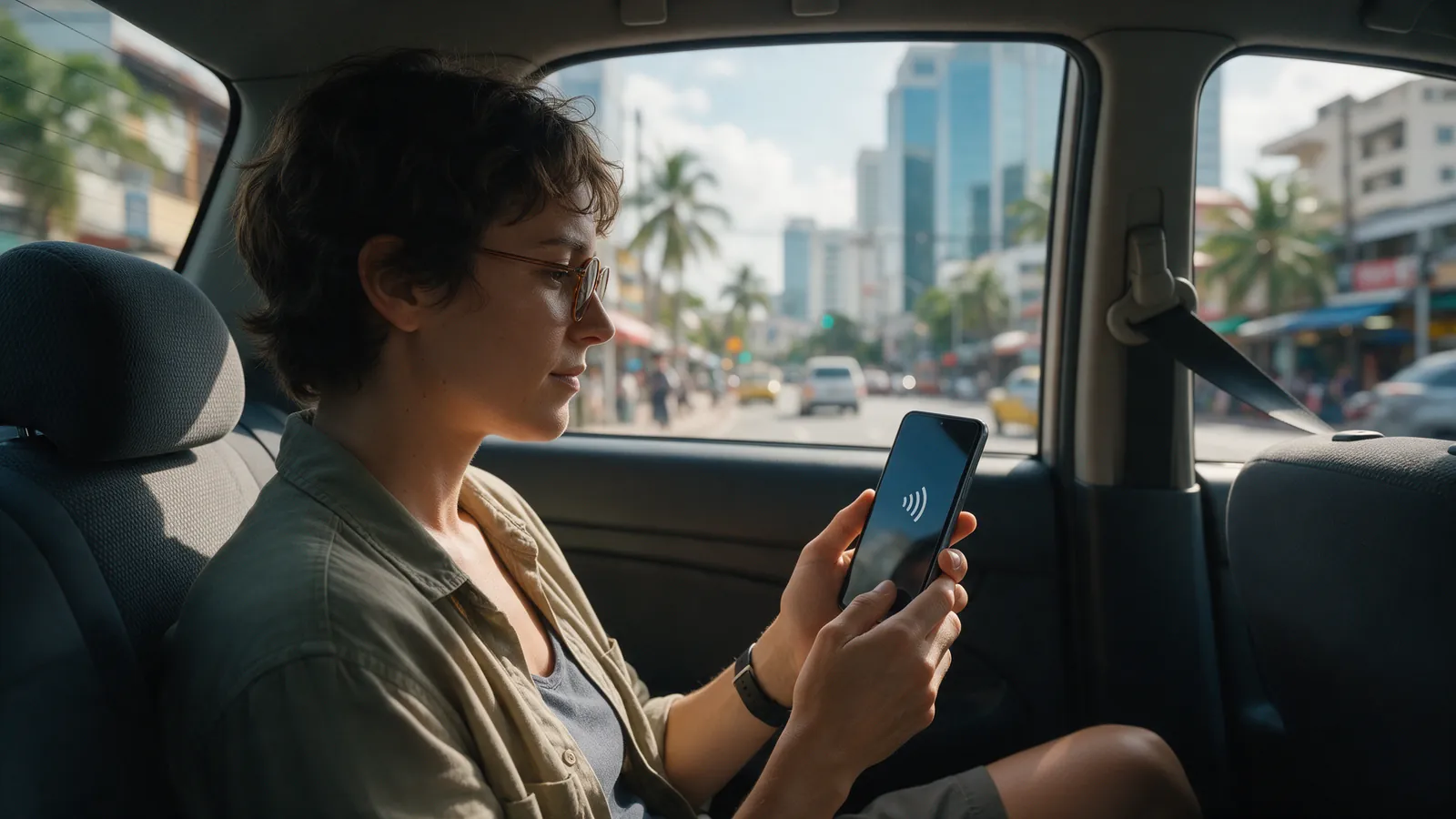
When you travel in a private car, a quick stop at a money changer is easy to build into the plan. Tell your driver where you'd like to change money, at a mall near your first stop or in the city centre. On a one-way transfer, the driver can drop you right there; if you book our hourly Day Trip Service, the car stays with you between stops, money changer included. With a Luxway SGMY car, pick-up is door-to-door anywhere in Singapore, you stay in the car through immigration on both sides, and the fare covers tolls, checkpoint fees, fuel and parking. There's zero deposit, and you pay the driver on arrival, so the only currency question left is how much you'll spend in JB.
Planning the rest of the trip? Our JB day trip guide has ideas for shopping, food and family stops.
Book your JB trip
See routes and fares on our Singapore to Johor private car page, read how to book, or Whatsapp us with your date, pick-up point and number of passengers for a quick quote.
Frequently Asked Questions
Is it better to change ringgit in Singapore or in JB?
Money changers in JB often offer slightly better rates for Singapore dollars, but the difference is usually small. Changing a little in Singapore and the rest in JB gives you cash on arrival plus a chance at a better rate.
How do I know if a money changer is licensed?
In Singapore, search the business on the MAS Financial Institutions Directory. In Malaysia, check Bank Negara Malaysia's list of licensed money services businesses, and look for the industry association logo at the counter.
Can I pay in JB with my Singapore bank app?
Yes, at shops that display DuitNow QR, if your bank takes part in the Singapore–Malaysia QR link. DBS, OCBC and UOB were among the participants at launch. Not every stall accepts QR, so carry some cash too.
Should I pay in SGD or MYR when using my card in Malaysia?
Choose ringgit. If the terminal converts to Singapore dollars for you, the rate is usually worse than your own bank's conversion.
Do I need to declare cash when crossing into Malaysia?
Only large amounts. Singapore requires a Cash Movement Report above S$20,000 or its equivalent, and Malaysia has its own declaration rules for large sums. Normal holiday spending money is well below these levels.
Last updated: 14 October 2026

Luxway SGMY
Planning a trip to JB, Melaka, or Genting? At Luxway, we believe in transparency and comfort. Our blog features updated 2026 guides on private car transfers, border-crossing tips, and hidden gems in Malaysia. Read our curated content to travel like a VIP with no hidden fees.