Table of Contents
- The route at a glance
- Stop 1: Kota Jail
- Stop 2: Sultan Ibrahim Building
- Stop 3: Johor Bahru Chinese Heritage Museum
- Stop 4: Jalan Tan Hiok Nee
- Stop 5: Jalan Dhoby
- Stop 6: Johor Bahru Old Chinese Temple
- Stop 7: The Indian quarter
- Extend it by car: royal and religious landmarks
- Tips for walking JB’s old town
- Making the walk easier with a private car
- Book your heritage day in JB
- Frequently Asked Questions
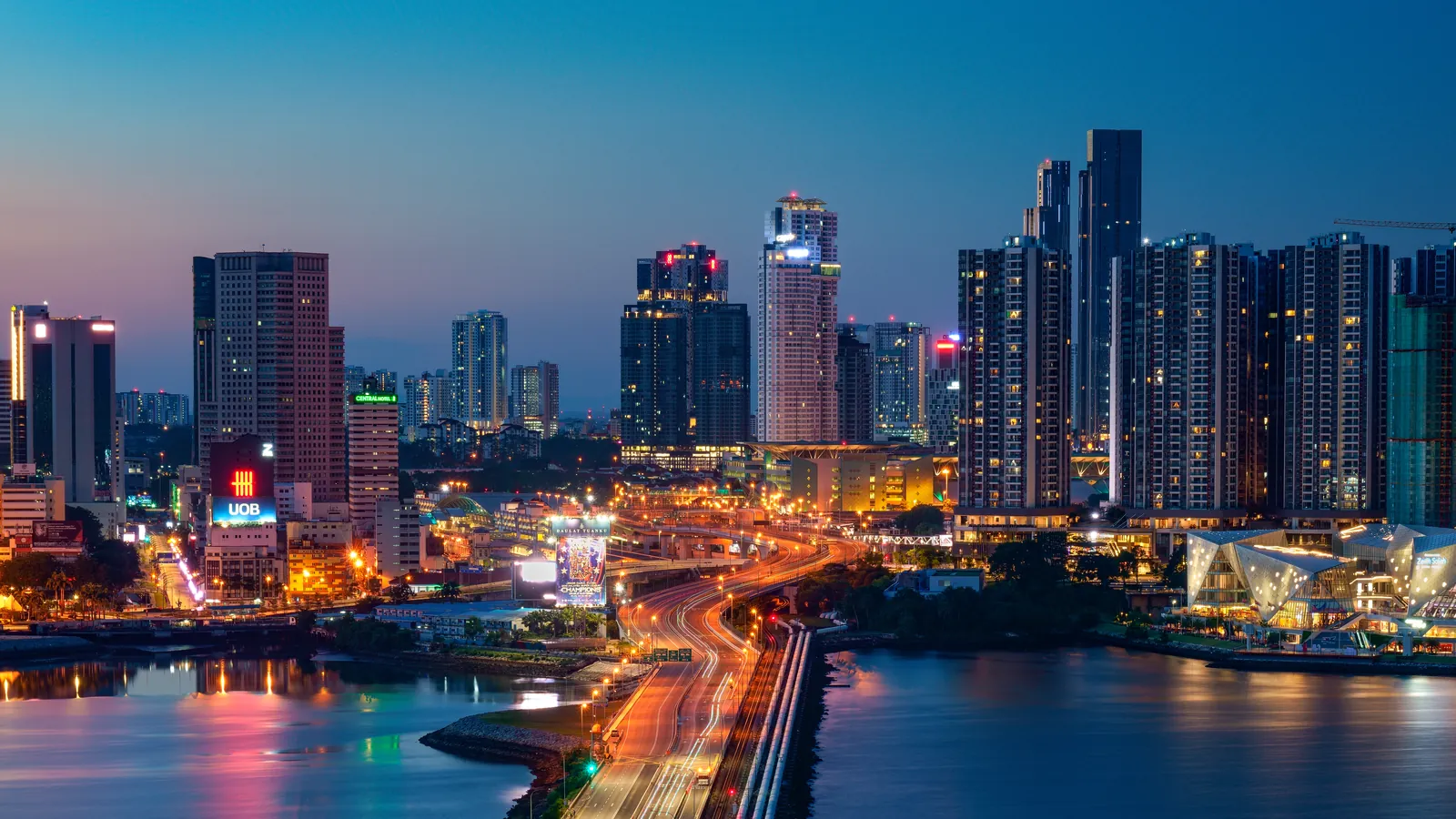
Johor Bahru’s old town is compact enough to explore on foot in two to three hours. Start at the restored Kota Jail, walk over to the Sultan Ibrahim Building on Bukit Timbalan, then head downhill to wander the shophouse streets of Jalan Ibrahim, Jalan Tan Hiok Nee, Jalan Dhoby and Jalan Trus, finishing at the Old Chinese Temple and the Indian quarter around Jalan Ungku Puan. The route is about 2.5 km, mostly flat after Bukit Timbalan, and most stops are within a few minutes of the next. Add the Sultan Abu Bakar State Mosque or the palace grounds by car if you have more time.
The route at a glance
| Stop | Where | Time to allow |
|---|---|---|
| 1. Kota Jail | Jalan Ayer Molek | 45–60 minutes |
| 2. Sultan Ibrahim Building | Bukit Timbalan | 15 minutes (outside only) |
| 3. Johor Bahru Chinese Heritage Museum | Jalan Ibrahim | 30–45 minutes |
| 4. Jalan Tan Hiok Nee | Heritage street | 30 minutes, longer with a café stop |
| 5. Jalan Dhoby | Parallel street | 15–20 minutes |
| 6. Old Chinese Temple | Off Jalan Trus | 20 minutes |
| 7. Indian quarter | Jalan Ungku Puan and Jalan Trus | 15–20 minutes |
Stop 1: Kota Jail
Begin on Jalan Ayer Molek at Kota Jail, the former Johor Bahru prison. Built by the British in 1883, it was one of the oldest prisons in Malaysia and was used as a bunker by the Japanese army during the occupation. After years of disuse, it reopened in 2025 as a heritage site and creative hub, with cafés, small shops and a florist set inside the old cell blocks.
The highlight is the Ayer Molek Prison Gallery, a self-guided tour of about 30 minutes through old photographs and displays on daily life inside. The final room shows how caning was carried out, including official footage, so parents of young children may want to skip that section. There is a small entry fee for the gallery.
Stop 2: Sultan Ibrahim Building
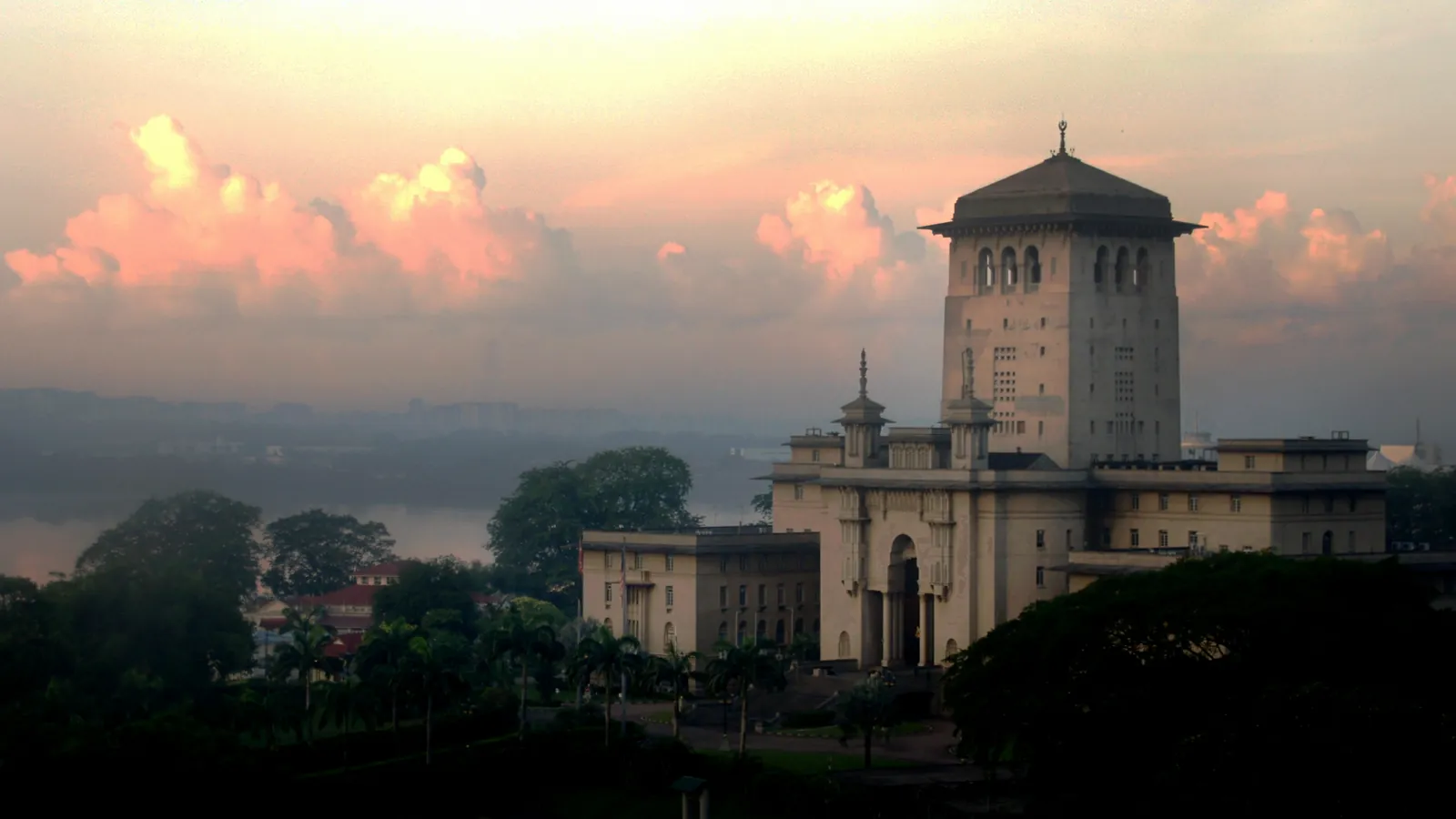
From the jail it is roughly a 10 to 15-minute walk south to the top of Bukit Timbalan, where the Sultan Ibrahim Building looks out over the Strait of Johor. Completed in 1940 and designed by the architecture firm Palmer and Turner, it mixes colonial and Malay styles with Saracenic touches, crowned by a square tower. It was long the tallest building in Johor Bahru, until the 1970s. During the Japanese occupation it served as a military command post, and for decades afterwards it housed the state secretariat, which has since moved to Kota Iskandar.
It is still government property, and plans to turn it into a museum have been discussed for years. For now, enjoy the façade and the view from the road; ask the guards before going any further. From here the rest of the route is downhill or flat.
Stop 3: Johor Bahru Chinese Heritage Museum
Walk down into the old commercial grid to Jalan Ibrahim, home of the Johor Bahru Chinese Heritage Museum. Spread over several floors of a restored building, it tells how Chinese settlers arrived in the 19th century, many to farm pepper and gambier, and how they shaped the town once known as Tanjung Puteri. It is a good primer before you walk the streets named after these early community leaders. The museum is closed on Mondays.
Stop 4: Jalan Tan Hiok Nee
Around the corner is JB’s best-known heritage street, named after Tan Hiok Nee, a leader of the early Chinese community and a trader in pepper and gambier. The row of restored shophouses is now a mix of cafés, small shops and long-running family businesses, with red lanterns strung across the road during festive seasons.
Look out for Hiap Joo Bakery, which has been baking since 1919 in a wood-fired oven and is famous for its banana cake. It often sells out, so come in the morning and check its opening days before you plan around it.
Stop 5: Jalan Dhoby
The next street over takes its name from the dhobi, or laundrymen, who once worked here. A couple of traditional laundry shops are still in business, but the street is now better known for its independent cafés in converted prewar shophouses. Many traditional businesses in this area moved to the suburbs over the years, and the café wave that began in the 2000s helped bring people back to the old town.
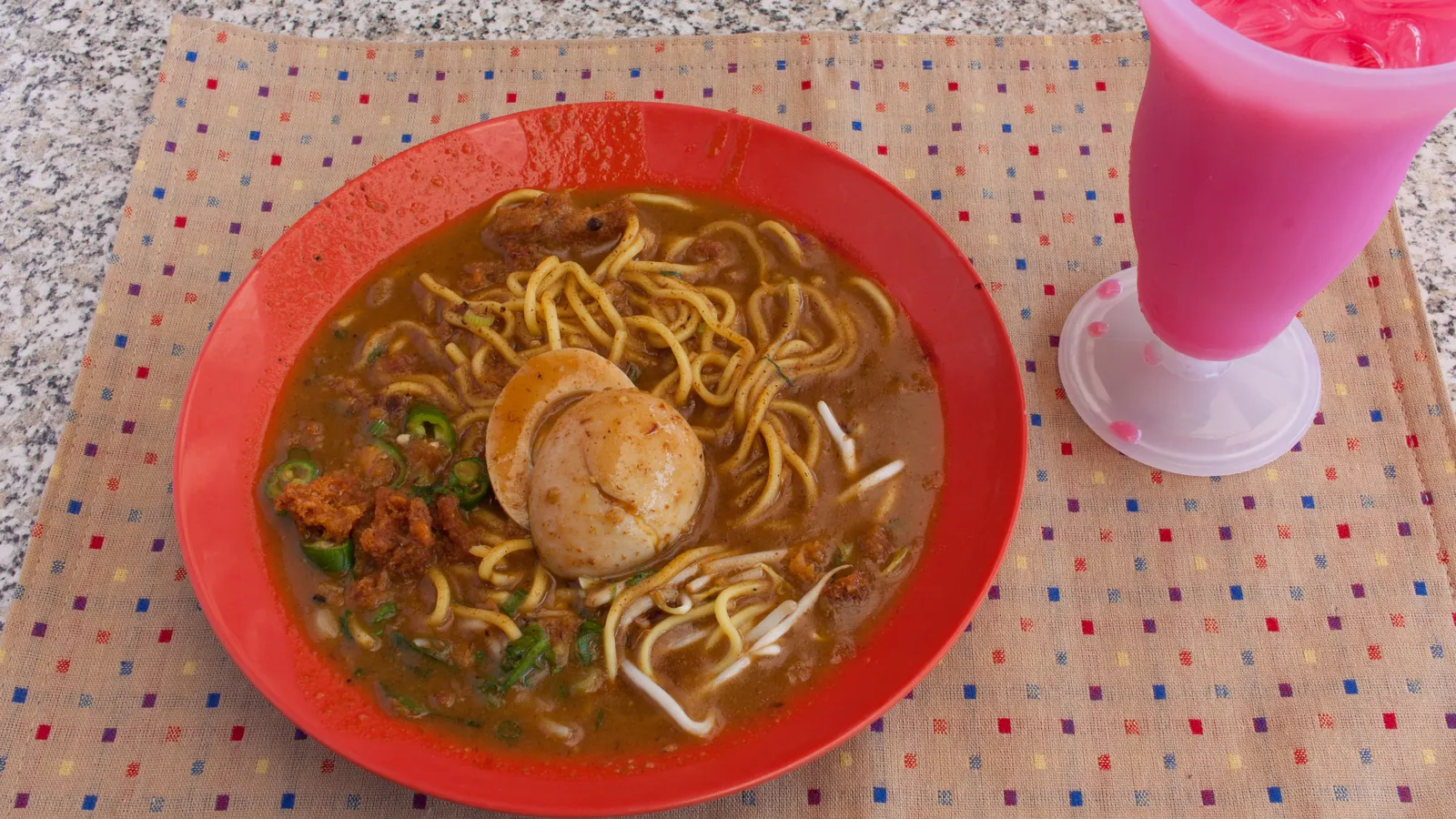
At the corner of Jalan Dhoby and Jalan Trus, the Hainanese kopitiam Hua Mui has been serving coffee, kaya toast and chicken chop since 1946. It is a natural break halfway through the walk.
Stop 6: Johor Bahru Old Chinese Temple
Tucked behind the high-rises off Jalan Trus, this modest temple dates back to the 1870s, when Sultan Abu Bakar granted land to the Chinese community. It is often called the Temple of Unity because it houses five deities, each linked to one of the city’s main dialect groups: Hokkien, Teochew, Cantonese, Hakka and Hainanese. The building was largely rebuilt in the 1990s, but the spirit of the place is unchanged.
The temple is the heart of the Chingay parade held in the first lunar month, when the deities are carried through the streets and roads close for the evening procession. If you plan to visit around then, read our Chinese New Year in JB guide for dates and traffic tips.
Stop 7: The Indian quarter
A few minutes on, around the junction of Jalan Trus and Jalan Ungku Puan, the shops change to sari stores, flower-garland stalls and banana-leaf restaurants. The Arulmigu Rajamariamman Devasthanam stands here, one of the city’s older Hindu temples, rebuilt in its present form in the late 20th century. Visitors are generally welcome outside prayer times; remove your shoes before entering and dress modestly.
From here it is a short walk to Jalan Wong Ah Fook, named after a carpenter who became a prominent builder in early Johor Bahru. The nearby lanes around Jalan Meldrum and Jalan Siu Nam, once known as Kampung Ah Fook, are lined with older shophouses and food stalls if you want to keep exploring.
Extend it by car: royal and religious landmarks
Several of JB’s finest heritage sites sit outside the old town, mostly along the waterfront to the west, and are too far apart to walk comfortably in the heat. A short drive links them:
- Sultan Abu Bakar State Mosque. Built between 1892 and 1900 on a hill along Jalan Skudai, it combines Victorian and Moorish styles and overlooks the strait. Visitors should dress modestly and avoid prayer times; access for non-Muslims may be limited to certain areas.
- Istana Besar. The 19th-century palace by the sea houses the Royal Abu Bakar Museum, which was closed for upgrading for many years. Check whether it is open before you go; the gardens and the façade are worth seeing either way.
- Kompleks Warisan Sultan Abu Bakar. This heritage complex on Jalan Sungai Chat reopened on 3 June 2026 after an upgrade. It brings together the Johor Art Gallery, a weaving gallery and Rumah Limas Johor, a traditional Malay house. At time of writing it was listed as open daily from 9am to 5pm.
- Arulmigu Sri Rajakaliamman Glass Temple. Its interior is covered in mirrored glass mosaics. Hours for tourists differ from those for devotees, so check before visiting.
For more ideas beyond heritage, see our list of 25 things to do in Johor Bahru.
Tips for walking JB’s old town
- Start early. By late morning the heat builds quickly. If you arrive before Kota Jail opens, walk the route in reverse and finish there instead.
- Avoid Mondays if you want the Chinese Heritage Museum, and note that some family businesses close on Sundays or sell out early.
- Dress for temples and mosques. Cover shoulders and knees, and wear shoes that slip off easily.
- Watch your step. Pavements are uneven in places, with high kerbs and open drains. A stroller works, but a baby carrier is easier.
- Carry small ringgit notes. Many older shops and bakeries prefer cash or a local QR wallet.
- Have a rain plan. Covered five-foot ways run along most shophouse rows, and the cafés make good shelter during a sudden downpour.
- Stay nearby if you want an early start. Our guide to where to stay in JB covers hotels near the old town.
Making the walk easier with a private car
The old town sits right next to the BSI immigration complex, but on a busy day you can lose an hour in queues before you even start walking. With a private car from Luxway SGMY, you are picked up from home anywhere in Singapore and stay in the car through both checkpoints. Your driver can drop you at Kota Jail and collect you at the other end of the route in the old town.
If you want to add the mosque, the palace grounds and the heritage complex, our Day Trip Service keeps the same car and driver with you for 8, 10 or 12 hours, which suits grandparents or anyone who prefers shorter walking stretches.
Book your heritage day in JB
Check fares and vehicles on our Singapore to Johor Bahru page, then book through our online booking form or Whatsapp us with your date, pick-up point and group size. No deposit is needed; you pay the driver on arrival.
Frequently Asked Questions
How long does the JB heritage walk take?
Allow two to three hours for the walking route, including time inside Kota Jail and the Chinese Heritage Museum. Add an hour or two if you include a long kopitiam lunch or drive on to the mosque and palace area.
Can I go inside the Sultan Ibrahim Building?
It is still government property and is not run as a visitor attraction. You can photograph it from the road; ask the guards before going further, and check for news on its planned conversion into a museum.
Is the JB old town walk suitable for children?
Yes, the distances are short. Bring water and hats, and note that the last room of the Kota Jail prison gallery shows how caning was carried out, which some parents prefer young children to skip.
What should I wear to visit temples and the mosque?
Clothes that cover your shoulders and knees, and shoes that are easy to take off. Some places of worship lend robes or scarves to visitors, but it is simpler to arrive dressed modestly.
Is it better to visit on a weekday or weekend?
Weekday mornings are quieter and cooler, but avoid Mondays if you want to see the Chinese Heritage Museum. Weekends are livelier in the cafés but busier at the checkpoint.
Last updated: 14 October 2026

Luxway SGMY
Planning a trip to JB, Melaka, or Genting? At Luxway, we believe in transparency and comfort. Our blog features updated 2026 guides on private car transfers, border-crossing tips, and hidden gems in Malaysia. Read our curated content to travel like a VIP with no hidden fees.